
Last reviewed: July 2026
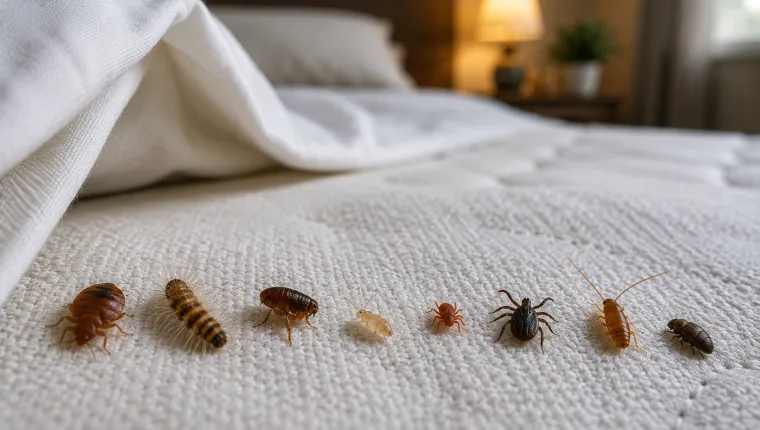
Tiny bugs in a bed are often carpet beetle larvae, fleas, booklice, mites, ticks, cockroach nymphs, spider beetles, or other small household insects rather than bed bugs. The most important identification factors are body shape, number of legs, jumping or crawling behavior, body covering, exact hiding place, and the physical evidence found nearby.
Do not begin bed bug treatment based only on itching, a blurry photograph, one stain, or a small dark speck. Skin reactions cannot identify the responsible pest, and lint, seeds, crumbs, scabs, insect fragments, and fabric fibers are frequently mistaken for bed bugs.
A bed bug is typically:
- Flat and oval when unfed
- Reddish brown as an adult
- Wingless
- Equipped with six legs and two antennae
- Approximately the size and shape of a small apple seed as an adult
- Unable to jump or fly
- Usually found near mattress seams, bed frames, headboards, or other resting areas
Capture the specimen with clear tape or a small sealed container before cleaning or spraying.
Photograph it beside a ruler or coin, record where it was found, and compare the complete insect rather than one color or marking.
For confirmed bed bug features, see our bed bug identification guide. For a systematic search of the sleeping area, use our bed bug inspection checklist.
- How to Tell Whether a Tiny Bug Is a Bed Bug
- Bed Bug Lookalike Comparison Matrix
- Carpet Beetle Larvae in Bed
- Fleas in Bed
- Booklice in Beds and Bedrooms
- Mites Found in Beds
- Ticks in Bed
- Cockroach Nymphs in Bed
- Spider Beetles
- Small Ants in Bed
- Lice and Bed Bug Confusion
- Insects and Debris Commonly Mistaken for Bed Bugs
- Where the Bug Was Found Matters
- How to Collect a Sample Safely
- How to Estimate the Severity of the Problem
- Why You Should Not Treat Before Identification
- Immediate Steps After Finding a Tiny Bug in Bed
- Photo and Specimen Submission Checklist
- When to Call a Pest-Control Professional
- Frequently Asked Questions
- What tiny bugs are commonly found in beds besides bed bugs?
- What looks like a bed bug but has hairs?
- What looks like a bed bug but jumps?
- What tiny white bugs are found in beds?
- Are tiny bugs near a window bed bugs?
- Can carpet beetle larvae live in a mattress?
- Do carpet beetle larvae bite?
- Can fleas live in a bed?
- Can booklice live in a bedroom?
- Can dust mites be seen crawling?
- How can I tell a tick from a bed bug?
- How can I tell a cockroach nymph from a bed bug?
- Can a skin reaction identify the bug?
- Should I spray my mattress when I find a tiny bug?
- How should I preserve a tiny bug?
- Who can identify a tiny household insect?
- What should I do when bed bugs are confirmed?
- How much does bed bug treatment cost?
How to Tell Whether a Tiny Bug Is a Bed Bug
The U.S. Environmental Protection Agency recommends looking for live insects and physical evidence such as fecal spots, eggs, eggshells, cast skins, and reddish stains.
Use the following questions before assuming the insect is a bed bug:
- Does it have six legs or eight?
- Is the body flat, rounded, elongated, or covered with hairs?
- Does it jump, fly, crawl quickly, or move slowly?
- Was it found attached to a person or animal?
- Was it inside a mattress seam, on a windowsill, beneath furniture, or near moisture?
- Are there multiple life stages nearby?
- Are there fecal spots, eggs, cast skins, fabric damage, or pet-related evidence?
One characteristic is rarely enough. For example, a flea can be brown and small, but its narrow body and jumping behavior differ from the broad, flat shape of a bed bug. A carpet beetle larva may be found in bedding, but it is elongated and covered with hairs.
Bed Bug Lookalike Comparison Matrix
| Possible pest | Body shape and covering | Movement | Common evidence | Typical location |
|---|---|---|---|---|
| Bed bug | Flat, oval, smooth, reddish brown; pale when young | Crawls; does not jump or fly | Fecal spots, eggs, cast skins, blood-like stains | Mattress seams, bed frames, headboards, nearby furniture |
| Carpet beetle larva | Elongated, segmented, and covered with hairs or bristles | Crawls slowly | Hairy cast skins and damage to natural-fiber materials | Bedding, closets, rugs, furniture, lint accumulations |
| Flea | Very narrow from side to side, dark brown, with enlarged hind legs | Jumps | Adult fleas, flea feces, pet scratching, activity near animal bedding | Pets, carpets, upholstery, pet-resting areas |
| Booklouse | Very small, pale or translucent, soft-bodied, with a relatively large head | Crawls; may move quickly for its size | Moisture, mold, damp paper, no bed bug fecal spotting | Windows, books, cardboard, walls, humid bedrooms |
| Mite | Usually extremely small, with eight legs as a nymph or adult | Crawls | Depends on mite type and animal or environmental source | Bird nests, rodents, stored products, plants, pets, or damp materials |
| Tick | Rounded or oval with eight legs as a nymph or adult and no antennae | Crawls; may attach to a host | Attached tick, pet or outdoor exposure | Pets, clothing, bedding after outdoor activity |
| Cockroach nymph | Elongated to oval, with long antennae and visible legs | Runs quickly | Droppings, egg cases, shed skins, kitchen or bathroom activity | Bedrooms near kitchens, furniture, electronics, boxes |
| Spider beetle | Rounded, smooth, shiny, and beetle-like | Crawls | Stored-food or animal-nest activity | Pantries, attics, walls, bedrooms, stored materials |
| Small ant | Clearly divided body with a narrow waist and elbowed antennae | Crawls in trails | Foraging trails and nearby food or moisture | Nightstands, windows, walls, food containers |
| Louse | Flattened, wingless insect with legs adapted to grasp hair or fibers | Crawls; does not jump | Nits attached to hair or clothing seams, depending on species | Human hair, clothing, or body rather than mattress harborages |
Carpet Beetle Larvae in Bed
Carpet beetle larvae are among the most common bed bug lookalikes found in bedrooms.
They are usually:
- Elongated rather than broad and oval
- Brown, tan, or banded
- Covered with hairs or bristles
- Slow-moving
- Smaller than many adult bed bugs
Carpet beetle larvae feed on materials containing animal proteins, including:
- Wool
- Fur
- Feathers
- Silk
- Leather
- Hair
- Dead insects
- Pet debris
- Lint containing natural fibers
They may appear in beds when lint, hair, feathers, wool blankets, natural-fiber rugs, upholstered furniture, stored clothing, or insect remains are nearby.
Signs That Suggest Carpet Beetles
- Hairy larvae
- Hairy or hollow cast skins
- Irregular holes in natural-fiber materials
- Larvae along carpet edges, closets, vents, or beneath furniture
- Adult beetles near windows
Carpet beetle larvae do not bite. Their hairs may cause skin irritation in sensitive people, but a rash cannot confirm that carpet beetles are responsible.
Control focuses on identifying the infested material, vacuuming lint and hair, laundering or cleaning textiles, inspecting stored fabrics, and removing dead insects or animal-based debris.
Fleas in Bed
Fleas may be found in beds when a dog, cat, or wildlife host rests nearby.
A flea differs from a bed bug because it:
- Has a narrow body compressed from side to side
- Has enlarged rear legs
- Can jump
- Usually remains associated with animals and their resting areas
Possible flea evidence includes:
- Pets scratching or chewing
- Adult fleas found with a flea comb
- Dark flea fecal material in the animal’s hair
- Fleas jumping around carpets, bedding, or ankles
- Activity near pet beds, sofas, and rugs
Flea eggs commonly fall from a pet into carpets, bedding, furniture, cracks, and other resting areas. Effective control requires coordinated veterinary care for the pet and environmental cleaning.
See our flea treatment guide for the pet, home, and yard process.
Booklice in Beds and Bedrooms
Booklice, also called psocids, are tiny pale insects commonly associated with moisture, mold, damp paper, and high humidity.
They may be:
- White, cream, gray, or translucent
- Smaller than adult bed bugs
- Soft-bodied
- Equipped with a relatively large head
- Found in groups around damp materials
Booklice may appear near:
- Windows
- Books
- Cardboard
- Wallpaper
- Damp walls
- Mattresses stored in humid rooms
- Mold-affected furniture
They do not feed on blood and are not known for biting people. Their presence usually indicates a moisture or mold condition rather than a need for bed bug treatment.
Control may involve:
- Reducing indoor humidity
- Repairing leaks
- Improving ventilation
- Removing mold-damaged materials
- Drying stored items
- Vacuuming affected areas
Mites Found in Beds
The word “mite” describes a large and diverse group of tiny arachnids. Different mites have different hosts, habitats, and health significance.
Possible sources include:
- Bird nests
- Rodent nests
- Pets
- Stored food
- Plants
- Moist organic material
Bird and Rodent Mites
Bird or rodent mites may enter occupied rooms after a nest is abandoned, removed, or the host animal dies.
Possible clues include:
- A bird nest near a window, roof, vent, or air-conditioning unit
- Rodent activity in walls or attics
- Very small crawling organisms near windows or ceilings
- Activity beginning after wildlife exclusion or nest removal
Mites can be extremely difficult to identify from photographs because of their size. Collect several specimens with clear tape and seek identification through an extension service, pest professional, veterinarian, or qualified laboratory.
Do not spray mattresses or skin based only on unexplained itching. The host source and mite type must be investigated.
Dust Mites
Dust mites are microscopic and cannot normally be seen crawling on a bed with the naked eye.
They feed on organic debris such as shed skin and are associated with indoor dust, mattresses, carpets, and upholstery. They do not bite, although their body fragments and waste can contribute to allergic symptoms in sensitive people.
A clearly visible bug crawling across the sheet is unlikely to be a dust mite.
Ticks in Bed
A tick may be brought into bed on:
- A dog or cat
- Clothing
- Outdoor equipment
- A person returning from vegetation or animal habitat
Ticks are arachnids. Nymphs and adults have eight legs and lack antennae.
They do not:
- Jump
- Fly
- Build bed bug-like harborages in mattress seams
A recently fed tick may appear swollen and rounded. An unfed tick is flatter but still differs from a bed bug in leg number, body structure, and lack of antennae.
When a tick is attached to a person, follow current public-health guidance for removal and preserve the specimen when practical. Seek medical advice based on symptoms, location, exposure history, and local tick-borne disease risk.
Pet ticks should be discussed with a veterinarian. Do not apply household insecticide directly to the animal.
Cockroach Nymphs in Bed
Young cockroaches are occasionally mistaken for bed bugs, particularly when they are small and dark.
A cockroach nymph generally has:
- A more elongated body
- Very long antennae
- More visibly extended legs
- Faster running behavior
- A body that is not as broadly rounded as a bed bug
German cockroach nymphs may appear dark with a lighter stripe along the back. Brown-banded cockroach nymphs may occur in bedrooms, furniture, closets, and electronics.
Evidence that supports cockroaches includes:
- Droppings
- Egg cases
- Shed skins
- Activity near food or moisture
- Additional captures in kitchens or bathrooms
- Fast movement into cracks
See our cockroach identification and control guide.
Spider Beetles
Spider beetles are small stored-product beetles with rounded bodies and relatively long legs. Their body shape can appear tick-like or spider-like.
They may be:
- Reddish brown
- Dark brown
- Smooth and shiny
- Rounded rather than flat
Spider beetles may be associated with:
- Stored food
- Rodent or bird nests
- Old organic debris
- Attics
- Wall voids
- Pantries
Finding one in a bedroom should prompt inspection of stored materials, animal nests, wall voids, and nearby food rather than bed bug treatment.
Small Ants in Bed
Ants may enter beds while searching for food, moisture, or insects.
Ants differ from bed bugs because they have:
- A distinctly narrow waist
- Elbowed antennae
- Three clearly divided body regions
- Trail-following behavior
Inspect nightstands, food containers, windows, walls, plumbing routes, and nearby cracks. Remove food and follow the trail to determine where the ants are entering.
Spraying one ant on the bed does not control a colony hidden outdoors, inside a wall, or beneath the building.
Lice and Bed Bug Confusion
Head lice, body lice, and pubic lice live in different human-associated environments and should not be treated as bed bug infestations.
Head lice and their eggs are associated primarily with scalp hair. Nits are attached firmly to individual hairs.
Body lice generally live and lay eggs in clothing seams and move to the body to feed.
Lice:
- Do not jump
- Do not fly
- Have six legs
- Are adapted to grasp hair or fabric
A healthcare professional can evaluate suspected lice. Do not apply a household bed bug pesticide to the scalp, skin, or clothing.
Insects and Debris Commonly Mistaken for Bed Bugs
Not every suspicious object is a living pest.
Common non-insect lookalikes include:
- Lint
- Fabric pills
- Crumbs
- Seeds
- Scabs
- Flakes of paint or wood
- Dried blood
- Plant material
- Small pieces of foam
- Insect fragments
Use magnification to look for:
- A complete head
- Six or eight legs
- Antennae
- Body segmentation
- Symmetry
- Movement
A photograph of an object without scale or focus may be impossible to identify reliably.
Where the Bug Was Found Matters
| Location | Pests or sources to consider |
|---|---|
| Mattress seams and bed-frame joints | Bed bugs, carpet beetle larvae, fabric debris |
| Pet bedding and carpet | Fleas, ticks, carpet beetle larvae |
| Windowsill | Adult carpet beetles, booklice, ants, spider beetles |
| Damp wall or cardboard | Booklice, mold-associated insects |
| Ceiling or wall near a bird nest | Bird mites, stored-product insects, spiders |
| Bedroom beside a kitchen | Cockroach nymphs, ants, stored-product beetles |
| Clothing or hair | Ticks, lice, fleas, outdoor insects |
| Wool blanket or natural-fiber rug | Carpet beetle larvae and clothes moth larvae |
How to Collect a Sample Safely
Preserving the specimen can prevent unnecessary treatment and improve identification.
Clear Tape Method
- Place clear tape gently over the insect.
- Lift it without crushing the body.
- Attach the tape to a white card or clear plastic bag.
- Write the date and exact location.
Container Method
- Use a small clear container with a secure lid.
- Guide the insect inside with paper or a soft brush.
- Do not handle it with bare fingers.
- Label the container.
What to Photograph
- The entire insect from above
- The insect from the side
- Legs and antennae
- A ruler or coin for scale
- The exact location where it was found
- Nearby stains, cast skins, damage, or droppings
A macro lens or clip-on phone lens may help, but focus and scale are more important than dramatic magnification.
How to Estimate the Severity of the Problem
Severity depends on confirmed evidence and distribution rather than fear, itching, or the size of one specimen.
| Evidence pattern | Possible interpretation | Next step |
|---|---|---|
| One unidentified insect | Accidental invader or isolated household pest | Preserve and identify before treatment |
| Repeated specimens of the same type | Local source or developing infestation | Inspect the relevant food, moisture, textile, pet, or structural source |
| Several life stages | Reproduction near the area | Expand inspection and use species-specific control |
| Evidence in several rooms | Wider distribution or multiple sources | Consider professional inspection |
| Confirmed bed bugs with fecal spots or eggs | Active bed bug infestation | Begin containment and treatment planning |
| Skin reactions without specimens | Cause remains unknown | Seek pest identification and medical advice based on symptoms |
Why You Should Not Treat Before Identification
Using the wrong treatment can:
- Expose people and pets unnecessarily
- Damage mattresses or furniture
- Disperse bed bugs into new areas
- Interfere with professional inspection
- Leave the actual pest source untreated
- Waste money on unsuitable products
Examples include:
- Spraying a mattress for booklice when the real issue is humidity
- Treating the carpet for bed bugs when fleas remain on an untreated pet
- Applying insecticide for carpet beetles without finding the infested fabric
- Treating bird mites without removing the abandoned nest source
- Using a bed bug fogger for cockroach nymphs
The EPA recommends confirming bed bugs and using an Integrated Pest Management approach rather than relying on one pesticide application.
Immediate Steps After Finding a Tiny Bug in Bed
- Capture the insect.
- Take focused photographs with scale.
- Record the date, room, and exact location.
- Inspect the mattress seam and bed frame for additional evidence.
- Check pets and pet-resting areas when fleas or ticks are possible.
- Check natural-fiber textiles when carpet beetles are possible.
- Inspect moisture and mold when booklice are possible.
- Avoid moving loose belongings to another bedroom.
- Do not apply pesticides to skin, pets, or bedding unless the label specifically permits it.
- Obtain professional identification when evidence remains uncertain.
Photo and Specimen Submission Checklist
| Item | Details to record |
|---|---|
| Date and time | When the specimen was found |
| Exact location | Mattress seam, sheet, wall, pet bed, window, floor, or furniture |
| Approximate size | Millimeters or comparison with a ruler |
| Movement | Jumping, flying, crawling quickly, crawling slowly, or attached |
| Body details | Hairy, flat, rounded, elongated, six legs, eight legs, or antennae |
| Nearby evidence | Stains, eggs, cast skins, droppings, fabric damage, mold, or pet activity |
| Photographs | Top, side, close-up, scale, and surrounding area |
| Specimen | Clear tape or sealed container |
| Property history | Travel, used furniture, pets, wildlife, leaks, or previous pest treatment |
When to Call a Pest-Control Professional
Professional identification or inspection is appropriate when:
- A bed bug may have been found
- Several rooms contain similar insects
- The specimens are too small to identify
- Bird or rodent mites are possible
- Cockroaches, fleas, or ticks continue appearing
- A pet or wildlife source may be involved
- DIY treatment has already been applied without success
- Children, pets, asthma, or chemical sensitivities complicate pesticide use
- The property is an apartment, hotel, dormitory, shelter, or healthcare facility
Ask the provider:
- What is the insect?
- Which features support the identification?
- Is the specimen an adult, nymph, or larva?
- Where is the likely source?
- What evidence shows an active infestation?
- Which nonchemical corrections are needed?
- Which products will be used?
- What follow-up is required?
Frequently Asked Questions
What tiny bugs are commonly found in beds besides bed bugs?
Common possibilities include carpet beetle larvae, fleas, booklice, mites, ticks, cockroach nymphs, spider beetles, ants, and lice.
What looks like a bed bug but has hairs?
A hairy or bristled insect found in bedding is more consistent with a carpet beetle larva than a bed bug.
What looks like a bed bug but jumps?
Fleas jump and have narrow bodies with enlarged rear legs. Bed bugs crawl and cannot jump.
What tiny white bugs are found in beds?
Possible causes include booklice, pale insect nymphs, mites, lice, or debris. Bed bug nymphs can also be pale, so a specimen is needed.
Are tiny bugs near a window bed bugs?
They may be adult carpet beetles, booklice, ants, spider beetles, or outdoor insects. Inspect the specimen and nearby evidence.
Can carpet beetle larvae live in a mattress?
They may occur in mattress seams, bedding, lint, hair, feathers, wool, or nearby furniture when suitable food is present.
Do carpet beetle larvae bite?
No. Their hairs may irritate sensitive skin, but they do not feed on blood.
Can fleas live in a bed?
Adult fleas may jump onto bedding, while eggs and immature stages can occur in areas where an infested pet rests.
Can booklice live in a bedroom?
Yes. Booklice may occur in humid bedrooms, damp cardboard, books, windows, wallpaper, or mold-affected materials.
Can dust mites be seen crawling?
Dust mites are microscopic and are not normally visible as individual bugs crawling across sheets.
How can I tell a tick from a bed bug?
Ticks have eight legs as nymphs or adults, no antennae, and may attach to a host. Bed bugs have six legs and antennae.
How can I tell a cockroach nymph from a bed bug?
Cockroach nymphs generally have longer antennae, a more elongated body, and faster running behavior.
Can a skin reaction identify the bug?
No. Bites, rashes, itching, and swelling cannot reliably identify bed bugs, fleas, mites, or another cause.
Should I spray my mattress when I find a tiny bug?
Not before identification. Treat a mattress only with a product specifically labeled for that surface and pest.
How should I preserve a tiny bug?
Use clear tape or a small sealed container, label the date and location, and avoid crushing the body.
Who can identify a tiny household insect?
A university extension service, qualified pest-control professional, entomologist, veterinarian, healthcare professional, or diagnostic laboratory may help depending on the suspected pest.
What should I do when bed bugs are confirmed?
Avoid moving belongings, preserve evidence, inspect sleeping areas, notify property management when applicable, and compare professional treatment options.
How much does bed bug treatment cost?
Cost depends on infestation spread, room count, property size, treatment method, preparation, and follow-up. See our bed bug treatment cost guide.
Do not diagnose a pest from bites or skin photographs alone. Preserve a specimen whenever possible. Pesticides must be used according to their EPA-registered labels, and products intended for structures must never be applied directly to people or pets.


