
Last reviewed: July 2026
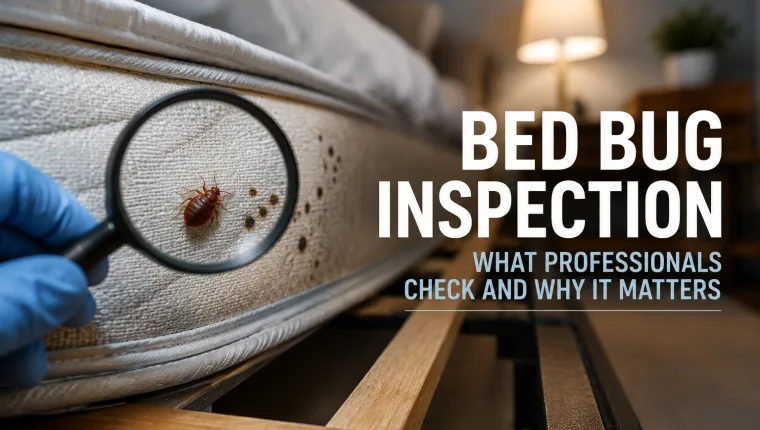
A professional bed bug inspection is a systematic examination of beds, upholstered furniture, sleeping areas, nearby cracks and crevices, and any other locations where people regularly rest. The inspector looks for live bed bugs, eggs, shed skins, fecal spotting, and other physical evidence that can confirm an infestation and reveal how far it may have spread.
Bites alone cannot confirm that bed bugs are present. Mosquitoes, fleas, mites, allergic reactions, skin conditions, and other causes can produce marks that look similar. The strongest confirmation is a bed bug specimen or reliable physical evidence identified by someone qualified to distinguish bed bugs from similar insects.
A good inspection should answer four practical questions:
- Are bed bugs actually present?
- Where was reliable evidence found?
- How many rooms or units may be involved?
- What monitoring, treatment, or additional inspection is needed?
The inspection should not automatically become a sales pitch for immediate treatment.
Before approving a service, ask the inspector to show you the evidence, document its location, explain any uncertainty, and identify areas that could not be inspected.
- What Does a Professional Bed Bug Inspection Include?
- Bed Bug Evidence Ranked by Reliability
- What Do Bed Bugs Look Like?
- Signs That Justify Booking a Bed Bug Inspection
- How Professionals Inspect for Bed Bugs
- Room-by-Room Bed Bug Inspection Checklist
- Can You Inspect for Bed Bugs Yourself?
- Should You Clean Before a Bed Bug Inspection?
- How to Prepare for a Professional Bed Bug Inspection
- How Long Does a Bed Bug Inspection Take?
- Visual Inspection vs. Monitoring Devices
- Are Canine Bed Bug Inspections Reliable?
- Bed Bug Inspections in Apartments and Multifamily Housing
- What Should Be Included in the Written Inspection Report?
- How Much Does a Bed Bug Inspection Cost?
- How to Choose a Bed Bug Inspection Company
- What Happens After the Inspection?
- Frequently Asked Questions
- Can bed bug bites confirm an infestation?
- What is the most reliable sign of bed bugs?
- Where does a bed bug inspector look first?
- How long does a bed bug inspection take?
- Should I throw away my mattress before the inspection?
- Should I clean the room before the inspector arrives?
- Can a bed bug inspection find eggs?
- Are canine bed bug inspections accurate?
- Can one bed bug mean an infestation?
- Do adjacent apartments need inspection?
- Does a negative inspection mean I do not have bed bugs?
- Can a pest control company treat based only on a photograph?
- Is inspection included in bed bug treatment?
- How should I save a suspected bed bug?
- What should I do if two inspectors disagree?
What Does a Professional Bed Bug Inspection Include?
A professional inspection normally begins with the places where people sleep or remain still for extended periods. Bed bugs are commonly associated with beds, but they can also hide around sofas, recliners, desks, wheelchairs, luggage, wall fixtures, and other resting areas.
The inspector may examine:
- Mattresses, seams, labels, tufts, piping, and handles
- Box springs, including the underside and internal framing when accessible
- Bed frames, slats, joints, screw holes, and headboards
- Nightstands and furniture beside the bed
- Upholstered chairs, recliners, and sofas
- Baseboards, carpet edges, and flooring cracks
- Curtains and nearby window coverings
- Picture frames, wall decorations, and loose wallpaper
- Electrical outlet and switch areas when they can be examined safely
- Luggage, backpacks, laundry containers, and stored belongings
- Cribs, pet bedding, wheelchairs, and other frequently occupied locations
- Adjacent rooms or apartment units when the property type and evidence justify it
The U.S. Environmental Protection Agency advises consumers to hire a professional experienced with bed bugs and to expect a detailed residence inspection. Furniture may need to be moved or partially disassembled when necessary to examine likely hiding places.
Inspection is not the same as treatment. The appointment should first establish whether the evidence supports a bed bug diagnosis and define the extent of the problem.
Bed Bug Evidence Ranked by Reliability
Not every sign has the same diagnostic value. A bite pattern or unexplained stain may justify further investigation, but it should not be treated as equivalent to finding a live bed bug.
| Evidence | Reliability | How it should be interpreted |
|---|---|---|
| Live adult or nymph identified as a bed bug | Highest | Strong direct evidence when the specimen is correctly identified |
| Viable bed bug eggs with other compatible evidence | High | Supports active reproduction but requires accurate identification |
| Multiple shed skins, fecal spots, eggs, and live specimens in the same area | High | Strong evidence of an established harborage |
| Shed skins or eggs without a live specimen | Moderate to high | Important evidence, but identification and context still matter |
| Dark fecal spotting in typical hiding locations | Moderate | Suspicious when found with other bed bug evidence; stains alone may have other causes |
| Rust-colored spots on bedding | Low to moderate | May result from crushed bed bugs or feeding, but does not independently confirm an infestation |
| Sweet or musty odor | Low | May occur in substantial infestations but is subjective and should not be used alone |
| Skin marks or bites | Low | Cannot identify the responsible pest or confirm that bed bugs are present |
| Canine alert without visual confirmation | Preliminary | Should direct a detailed visual search rather than automatically trigger treatment |
The Centers for Disease Control and Prevention states that inflammatory reactions to bites are not specifically diagnostic for bed bugs. Confirmation is best achieved by identifying adults or nymphs collected near the places where the affected person sleeps or rests.
What Do Bed Bugs Look Like?
Accurate identification matters because carpet beetle larvae, bat bugs, cockroach nymphs, booklice, ticks, fleas, and other small organisms may be mistaken for bed bugs.
According to the EPA’s bed bug identification guidance:
- Unfed adults are generally flat, oval, brown, and approximately the size of an apple seed.
- Recently fed adults appear more elongated and reddish-brown.
- Nymphs are smaller and may be translucent or pale yellow when they have not recently fed.
- Eggs are tiny, pearl-white, and approximately the size of a pinhead.
- Bed bugs do not fly.
Do not schedule whole-room treatment based solely on a blurry photograph.
Capture the insect when possible and request physical identification from a qualified pest professional, cooperative extension office, or another competent identification service.
See our guide to bugs commonly mistaken for bed bugs and our detailed bed bug nymph and egg identification guide.
Signs That Justify Booking a Bed Bug Inspection
A professional inspection is reasonable when you find direct evidence or when repeated suspicious signs cannot be explained through a careful self-check.
Common reasons to schedule an inspection include:
- A live insect that may be a bed bug
- Multiple dark fecal spots along mattress seams, box springs, or furniture joints
- Shed insect skins near a sleeping or resting area
- Tiny pale eggs or eggshells in cracks or fabric seams
- Repeated blood-colored spots on bedding combined with other physical signs
- A confirmed bed bug exposure during travel or in another residence
- Bed bugs confirmed in an adjoining apartment or nearby room
- Secondhand furniture brought into the property followed by suspicious evidence
- Unexplained insect activity around beds, sofas, or recliners
- Continued suspected activity after a previous bed bug treatment
- A canine alert that requires visual confirmation
Unexplained skin marks may justify looking for bed bugs, but they do not establish the diagnosis. The CDC explains that people react differently to bed bug bites and that marks can take time to appear. Some people develop no visible reaction.
Seek medical care for a severe allergic reaction, signs of infection, or another significant health concern. A pest inspection identifies insects and property evidence; it does not diagnose a skin condition.
How Professionals Inspect for Bed Bugs
1. The Inspector Reviews the History
The inspection may begin with questions about:
- Where suspicious insects or signs were found
- Which rooms people sleep or rest in
- When the problem was first noticed
- Recent travel or overnight guests
- Secondhand furniture or moved belongings
- Previous bed bug activity or treatment
- Apartment units, hotel rooms, dormitories, shelters, or workplaces connected to the concern
- Whether any pesticides, foggers, sprays, powders, or heat devices have already been used
- Whether furniture or belongings were moved between rooms
Be honest about previous DIY treatment. Pesticide use, furniture movement, and attempts to heat or spray the room may affect where bed bugs are hiding and how the inspector approaches the search.
2. The Sleeping Area Is Inspected First
The inspector normally starts with the bed or primary resting location. Sheets and bedding may be removed carefully without carrying items into another room.
The inspection usually focuses on:
- Mattress seams, piping, tufts, labels, and handles
- The underside of the mattress
- Box spring fabric, edges, corners, staples, and internal framing
- Bed frame joints, slats, brackets, bolt holes, and cracks
- Headboard attachment points and wall-facing surfaces
- Items stored beneath or immediately beside the bed
- Bedside tables, lamps, clocks, and wall decorations
The University of Minnesota Extension recommends beginning a detailed search with the mattress, box spring, and bed frame before expanding outward.
3. Nearby Furniture and Room Edges Are Checked
If evidence is found near the bed—or if suspicion remains high—the search expands into nearby furniture and perimeter areas.
The inspector may check:
- Nightstand drawers, undersides, joints, and screw holes
- Dressers and wardrobes near the bed
- Upholstered chairs and sofas
- Carpet edges and tack-strip areas
- Baseboard gaps and flooring cracks
- Curtain seams and window coverings
- Loose wallpaper and wall decorations
- Electrical and cable penetrations when safely accessible
Bed bugs can occupy extremely narrow cracks. A flashlight, inspection mirror, magnifier, collection vial, crevice tool, and other non-destructive equipment may be used.
4. Other Resting Areas Are Examined
Not every infestation is centered on a bed. A person who sleeps in a recliner, rests for long periods on a sofa, uses a wheelchair, or occupies another repeated location may create a separate area of activity.
Living rooms, guest rooms, home offices, cribs, pet resting areas, and mobility equipment may need inspection when the occupancy history or evidence supports it.
5. The Inspector Determines How Far the Evidence Extends
Finding one bed bug does not automatically reveal the full extent of the problem. The inspector should evaluate whether evidence is:
- Limited to one item
- Concentrated around one sleeping area
- Present in several locations within the room
- Present in multiple rooms
- Potentially connected to an adjoining unit
- Consistent with a recent introduction rather than an established infestation
The treatment scope should follow the evidence. A complete inspection helps avoid treating only the most obvious bed while missing activity in another resting area.
Room-by-Room Bed Bug Inspection Checklist
| Room or area | Priority inspection locations | Evidence to document |
|---|---|---|
| Primary bedroom | Mattress, box spring, frame, headboard, nightstands, baseboards, carpet edges, wall fixtures | Live bugs, eggs, skins, fecal spots, blood-colored stains, harborages |
| Guest bedroom | Bed, stored luggage, closets, furniture, wall decorations, bedding storage | Evidence connected to guests, travel, or moved belongings |
| Living room | Sofa seams, recliners, cushions, frame joints, throws, nearby tables, baseboards | Evidence around frequently occupied furniture |
| Child’s room or nursery | Crib joints, mattress seams, changing furniture, upholstered seating, stored textiles | Physical evidence without relying on skin marks |
| Home office | Desk chair, recliner, upholstered furniture, bags, wall gaps, cable penetrations | Evidence where a person remains seated for long periods |
| Closet and storage | Luggage, backpacks, boxes, stored bedding, clothing piles, furniture | Hitchhiking insects and items moved from affected areas |
| Laundry area | Hampers, bags, folded textiles, shared laundry equipment, wall edges | Evidence associated with transported laundry |
| Adjacent apartment units | Shared walls, sleeping areas, utility penetrations, hallways, common laundry | Evidence suggesting movement between units or a separate introduction |
Can You Inspect for Bed Bugs Yourself?
A careful self-inspection can help you collect evidence and determine whether professional identification is needed. It is not equivalent to a professional inspection, particularly when activity is light, several rooms may be involved, or treatment decisions depend on the result.
Basic Self-Inspection Tools
- Bright flashlight
- Magnifying glass
- Clear collection vial or resealable plastic bag
- Thin card or crevice tool
- Disposable gloves
- Phone or camera for location photographs
- Notebook for dates and findings
Safe Self-Inspection Order
- Do not move furniture or belongings into an unaffected room.
- Begin at the place where the person sleeps or rests most frequently.
- Inspect the sheets and visible mattress surfaces.
- Check mattress seams, labels, piping, and the underside.
- Inspect the box spring and bed frame carefully.
- Check the headboard and nearby furniture.
- Expand toward room edges only after completing the bed area.
- Capture suspicious insects without crushing them when possible.
- Photograph the exact location before cleaning or moving the evidence.
- Request identification before purchasing a major treatment.
Do not use foggers, space heaters, fireplaces, gasoline, kerosene, rubbing alcohol, or repeated unplanned pesticide spraying as an inspection response. The EPA warns that unsafe bed bug control methods may cause fires, explosions, pesticide exposure, or treatment failure.
Should You Clean Before a Bed Bug Inspection?
Do not perform an aggressive deep cleaning immediately before the inspector arrives unless the company specifically instructs you to do so. Vacuuming, laundering everything, discarding furniture, spraying products, or moving belongings can remove evidence or spread bed bugs into new locations.
Instead:
- Leave suspicious evidence in place when it can be preserved safely.
- Capture a specimen if possible.
- Photograph stains, skins, eggs, or insects before cleaning.
- Avoid moving belongings between rooms.
- Do not discard mattresses or furniture solely because bed bugs are suspected.
- Ask the inspection company what preparation it requires.
Inspection preparation and treatment preparation are different. The more extensive laundering, drying, decluttering, bagging, and furniture preparation described by the EPA is generally performed as part of a coordinated control plan, not automatically before diagnostic evidence has been documented.
How to Prepare for a Professional Bed Bug Inspection
Follow the company’s written instructions. Unless directed otherwise, use this preparation checklist:
- Provide access to every room included in the inspection.
- Do not move belongings from a suspected room to another room.
- Do not apply new sprays, powders, foggers, or repellents before the appointment.
- Do not discard beds, sofas, or other furniture before the inspector evaluates them.
- Remove only enough clutter to provide safe access.
- Keep captured insects in a sealed clear container.
- Save photographs and note where each sign was found.
- Identify every place where household members regularly sleep or rest.
- Provide details about travel, guests, secondhand furniture, and previous treatment.
- Tell the inspector about children, pets, respiratory concerns, or other treatment-related considerations.
- Inform the landlord or property manager when required in a rental.
- Arrange access to adjacent units if the property manager and inspector determine that they should be evaluated.
How Long Does a Bed Bug Inspection Take?
There is no reliable universal duration. The appointment depends on:
- Property size
- Number of bedrooms and resting areas
- Amount of furniture and clutter
- Whether furniture must be partially disassembled
- Whether direct evidence is found
- How many rooms or apartment units require inspection
- Whether monitoring devices or a canine team are used
- Whether the property has been treated previously
- Whether the inspection is residential, multifamily, hospitality, or commercial
A focused examination of one accessible bedroom may be relatively short. A detailed inspection of a furnished home, several apartment units, or a building with multiple resting areas can take considerably longer.
Do not choose an inspector based on a promise to finish quickly. Ask which rooms, furniture, adjacent units, and monitoring methods are included.
Visual Inspection vs. Monitoring Devices
A visual inspection provides immediate evidence when bed bugs, eggs, shed skins, or characteristic spotting can be found. Monitoring devices can help when the activity is too limited to detect during one appointment.
| Method | Best use | Important limitation |
|---|---|---|
| Detailed visual inspection | Locating physical evidence and mapping affected areas | Low-level or concealed activity can be missed during a single visit |
| Specimen identification | Confirming whether a collected insect is a bed bug | Does not by itself show the full extent of the infestation |
| Interceptor traps | Monitoring beds, sofas, and other furniture over time | Placement and furniture setup affect what is captured |
| Active monitors | Attracting and detecting low-level activity in selected settings | Performance depends on device, placement, duration, and conditions |
| Canine inspection | Screening large areas or directing a visual search | An alert should be confirmed visually before treatment whenever possible |
| Resident observations | Recording dates, rooms, specimens, and repeated evidence | Bites and unverified photographs can produce false conclusions |
Bed Bug Interceptors
Interceptor traps are placed beneath furniture legs to capture bed bugs attempting to climb onto or leave the furniture. They can support early detection and post-treatment monitoring.
The bed should usually be positioned so bedding does not touch the floor or wall, and every supported leg should be placed correctly in an interceptor. Follow the manufacturer’s directions and the inspector’s monitoring plan.
See our complete bed bug interceptor guide.
Are Canine Bed Bug Inspections Reliable?
Bed bug detection dogs can help screen rooms, apartment units, hotels, offices, schools, and other large or complex spaces. They may also be useful when a person reports suspicious activity but a visual inspection has not located evidence.
A canine alert should not automatically be treated as proof that a room requires treatment. Odor detection depends on the dog, handler, training, certification, search conditions, and confirmation procedures.
The EPA’s guidance concerning canine inspections in large facilities recommends using dogs together with visual inspection and visually locating a live bed bug before treatment begins when a dog alerts.
Before hiring a canine inspection company, ask:
- What independent training or certification does the dog-and-handler team maintain?
- How recently was the team evaluated?
- Will the handler know where previous reports occurred before the search?
- How are alerts documented?
- Will a technician attempt visual confirmation?
- Will treatment be recommended from an alert alone?
- What happens when visual confirmation is not possible?
- Does the company performing the inspection also sell the treatment?
- Is a second opinion available for a high-cost recommendation?
A canine inspection may improve screening efficiency, but it does not remove the need for documentation and professional judgment.
Bed Bug Inspections in Apartments and Multifamily Housing
Bed bug control is more complicated in multifamily housing because insects may be introduced repeatedly or move through shared walls, hallways, utility penetrations, laundry areas, furniture, or resident belongings.
If bed bugs are confirmed in an apartment:
- Notify the landlord or property manager promptly.
- Follow applicable lease terms, housing codes, and local laws.
- Do not move infested belongings into hallways or another unit.
- Ask whether units beside, above, and below the affected apartment will be inspected.
- Ask whether common resting or laundry areas require evaluation.
- Coordinate treatment and preparation across affected units.
The EPA advises apartment residents to notify the landlord after bed bugs are identified and states that nearby units should be inspected. The University of Minnesota Extension likewise recommends evaluating adjacent units and relevant common areas in multifamily properties.
Responsibility for inspection and treatment varies by jurisdiction. Pest Decoded does not provide a universal legal conclusion about who must pay. Check the applicable state and local housing rules.
What Should Be Included in the Written Inspection Report?
Ask for written findings even when no bed bugs are detected. The report should document what was inspected and what could not be inspected.
A useful bed bug inspection report includes:
- Property address and inspection date
- Name of the inspector and company
- Relevant license or credential information
- Rooms and apartment units inspected
- Furniture and resting areas examined
- Areas that were inaccessible or excluded
- Physical evidence found
- Photographs and precise locations
- Specimens collected for identification
- Whether the evidence confirms bed bugs or remains inconclusive
- Estimated distribution of the activity
- Need for adjacent-unit inspection
- Monitoring devices installed or recommended
- Recommended follow-up period
- Treatment recommendation, when justified
- Preparation instructions
- Inspection and treatment prices shown separately
A report should not state “bed bugs everywhere” without identifying where evidence was found. It should also avoid promising that the property is completely bed-bug-free based on one limited visual inspection.
How Much Does a Bed Bug Inspection Cost?
There is no single national inspection fee. Some pest control companies offer a no-cost initial inspection when evaluating the property for treatment. Others charge separately for:
- A detailed visual inspection
- Inspection of several bedrooms or apartment units
- Canine screening
- Commercial or hospitality inspections
- Monitoring devices
- Specimen identification
- A written report
- Follow-up inspection
Before scheduling, request a written price and ask:
- How many rooms or units are included?
- Is the inspection visual, canine, or both?
- Is a written report included?
- Will specimens be identified?
- Are interceptors or monitors included?
- Is the fee credited toward treatment?
- Is follow-up inspection included?
- Does the company charge separately for adjacent units?
Treatment is a separate service. See our bed bug treatment cost guide for heat, chemical, fumigation, room, apartment, and whole-home pricing. If you are comparing an inspection fee with the broader cost of professional service, our pest control cost guide explains the main factors that affect inspection, treatment, and follow-up pricing.
How to Choose a Bed Bug Inspection Company
Bed bugs require specialized experience. A general pest control company may be licensed but have limited experience locating low-level bed bug activity or managing infestations across several rooms.
Ask potential inspectors:
- How often do you inspect and treat bed bugs?
- What physical evidence do you require before recommending treatment?
- Which rooms and furniture will you inspect?
- Do you inspect sofas, recliners, and other resting areas?
- Will you examine adjacent apartment units when appropriate?
- Do you use visual inspection, monitors, canines, or a combination?
- Will I receive a written report and photographs?
- How do you handle an inconclusive inspection?
- Do you provide follow-up monitoring?
- Does your treatment program use Integrated Pest Management?
- How can I verify the company’s state license?
The EPA recommends hiring an experienced, reputable professional who uses Integrated Pest Management. Effective bed bug control generally combines identification, inspection, monitoring, physical measures, resident cooperation, targeted treatment, and follow-up rather than relying on one pesticide application.
What Happens After the Inspection?
If Bed Bugs Are Confirmed
Request a written treatment plan that identifies:
- Affected rooms and furniture
- Proposed treatment methods
- Preparation requirements
- Products and EPA registration numbers when pesticides are used
- Number and timing of visits
- Monitoring plan
- Follow-up inspection
- Warranty or retreatment terms
- Total price and exclusions
EPA advises consumers to prepare for multiple visits because very few infestations are controlled with only one treatment.
Compare our bed bug heat treatment guide, bed bug heat treatment cost guide, and complete bed bug treatment cost guide before selecting a method.
If the Inspection Is Inconclusive
An inconclusive inspection means the inspector did not find enough reliable evidence to confirm or exclude bed bugs.
Reasonable next steps may include:
- Professional identification of a captured specimen
- Installing interceptors or another monitor
- Recording dates and exact locations of new findings
- Repeating the visual inspection after an agreed monitoring period
- Inspecting another resting area
- Evaluating adjacent apartment units
- Obtaining an independent second opinion
Avoid whole-home treatment based only on bites, anxiety, an uncertain stain, or an unconfirmed canine alert.
If No Evidence Is Found
A negative visual inspection means that no confirming evidence was found in the accessible areas inspected. It does not guarantee that no bed bug exists anywhere in the property.
Review:
- Which rooms were inspected
- Which items could not be examined
- Whether monitoring was recommended
- Whether adjacent units were considered
- Whether previous pesticide use may have dispersed activity
- When the inspector recommends reassessment
If suspicious signs continue, collect physical evidence and request follow-up rather than repeatedly spraying the property without confirmation.
Frequently Asked Questions
Can bed bug bites confirm an infestation?
No. Bite reactions are not specific to bed bugs, and some people show no visible reaction. Confirmation should rely on identifying a specimen or finding reliable physical evidence in the property.
What is the most reliable sign of bed bugs?
A live adult or nymph correctly identified as a bed bug is the strongest direct evidence. Multiple eggs, shed skins, fecal spots, and live insects in a typical hiding area also provide strong evidence.
Where does a bed bug inspector look first?
The inspector usually begins with the primary bed or resting area, including mattress seams, the box spring, bed frame, headboard, nearby furniture, and room edges.
How long does a bed bug inspection take?
Inspection time depends on property size, furniture, clutter, number of resting areas, evidence, apartment units, and inspection method. Ask which rooms and items are included rather than relying on a standard time estimate.
Should I throw away my mattress before the inspection?
No. Do not discard furniture solely because bed bugs are suspected. Moving an infested mattress can spread insects, and many items can be treated or encased. Let the inspector evaluate it first.
Should I clean the room before the inspector arrives?
Avoid deep cleaning, spraying, discarding furniture, or moving belongings unless the company provides specific instructions. Preserve physical evidence and create only enough access for a safe inspection.
Can a bed bug inspection find eggs?
Yes, an experienced inspector may find eggs in seams, joints, cracks, and established harborages. Eggs are extremely small, so their absence during one visual inspection does not guarantee that none are present.
Are canine bed bug inspections accurate?
A trained dog may help screen an area and direct a visual search, but an alert should not automatically trigger treatment. Ask for visual confirmation and written documentation whenever possible.
Can one bed bug mean an infestation?
One correctly identified bed bug confirms that a bed bug was present, but it does not by itself reveal whether there is an established breeding infestation. The surrounding room and connected areas should be inspected.
Do adjacent apartments need inspection?
When bed bugs are confirmed in multifamily housing, nearby units may need inspection because activity can involve more than one apartment. Coordinate this decision with the property manager and qualified pest professional.
Does a negative inspection mean I do not have bed bugs?
Not necessarily. It means the inspector did not find confirming evidence in the accessible areas inspected. Monitoring or follow-up may be appropriate when suspicion remains high.
Can a pest control company treat based only on a photograph?
A photograph may support preliminary identification, but important treatment decisions should be based on a physical specimen, reliable property evidence, or a thorough professional inspection whenever possible.
Is inspection included in bed bug treatment?
Some companies include the initial inspection in the treatment price, while others charge separately. Confirm whether the quote includes inspection, written findings, follow-up visits, and monitoring.
How should I save a suspected bed bug?
Place it in a sealed clear container or resealable plastic bag. Record the date, room, and exact location where it was found. Avoid crushing the specimen if possible.
What should I do if two inspectors disagree?
Ask each inspector to identify the physical evidence and document its location. When an expensive treatment depends on the answer, request specimen identification, monitoring, or an independent third inspection.
A bed bug inspection provides evidence for a pest-management decision. It does not diagnose skin reactions, guarantee that every concealed insect has been detected, or replace instructions from a properly licensed local professional.


