
Last reviewed: July 2026
Bed bug prevention means reducing the chance that an insect reaches your home, detecting introductions early, and limiting spread if one is brought inside. No spray, encasement, luggage cover, interceptor, hotel inspection, or cleaning routine can guarantee that bed bugs will never appear.
The most effective prevention plan focuses on the situations in which bed bugs commonly hitchhike:
- Travel and overnight stays
- Used furniture and mattresses
- Shared laundry facilities
- Apartment and multifamily housing
- Visitors and overnight guests
- Moving, storage, and delivery services
- Incomplete treatment or reinfestation
Bed bugs do not appear because a home is dirty.
They spread primarily by hiding in luggage, clothing, furniture, bedding, boxes, and other belongings. Reducing clutter can make inspection and treatment easier, but cleanliness alone cannot prevent an introduction. University of Minnesota Extension confirms that bed bug introductions are linked to travel and secondhand items, not household cleanliness.
A practical prevention strategy is:
- Learn what bed bugs and their evidence look like.
- Inspect high-risk belongings and sleeping areas.
- Keep luggage and used furniture away from beds until inspected.
- Contain potentially exposed clothing and textiles during transport.
- Use suitable dryer heat when exposure is suspected and fabric permits it.
- Monitor beds and resting areas after travel or treatment.
- Report confirmed evidence promptly in multifamily housing.
For complete identification, see our bed bug guide. When evidence is suspected, follow our bed bug inspection checklist before applying a treatment.
- What Allows Bed Bugs to Enter or Return?
- Bed Bug Prevention at Home
- How to Prevent Bed Bugs While Traveling
- What to Do With Luggage After Travel
- Hotel-Room Inspection and Luggage Workflow
- Secondhand Furniture and Bed Bug Prevention
- Shared Laundry Facilities
- Bed Bug Prevention in Apartments
- Visitors, Guests, and Social Situations
- Mattress and Box-Spring Encasements
- Bed Bug Interceptors
- Bed Bug Prevention After Treatment
- Products and Barriers: What They Can and Cannot Do
- Portable Heating Devices
- Seasonal and Trigger-Based Prevention Calendar
- How to Know Whether Prevention Is Working
- When Professional Prevention Is Justified
- Printable Bed Bug Travel Checklist
- Frequently Asked Questions
- What is the best way to prevent bed bugs?
- Can bed bugs be prevented completely?
- Are bed bugs caused by a dirty home?
- Should I inspect every hotel room?
- Where should luggage be kept in a hotel?
- Should I keep clothing inside plastic bags while traveling?
- What should I do with clothing after travel?
- Does washing clothing kill bed bugs?
- Should luggage be stored under the bed?
- Can secondhand furniture bring bed bugs into a home?
- Can mattress encasements prevent bed bugs?
- Do bed bug interceptors prevent infestations?
- Should I use pesticide preventively?
- Can essential oils prevent bed bugs?
- What should apartment residents do after finding a bed bug?
- Can bed bugs move between apartments?
- How long should I monitor after treatment?
- How do I know whether treatment was successful?
- When should I call a bed bug exterminator?
What Allows Bed Bugs to Enter or Return?
Bed bugs are wingless and cannot jump. They usually reach a new property by being carried inside or by crawling from another infested area.
| Risk scenario | How bed bugs may spread | Primary prevention step |
|---|---|---|
| Hotel or vacation rental | Bed bugs hide in luggage, bags, shoes, or folded clothing | Inspect the room and keep belongings isolated from sleeping furniture |
| Used furniture | Live insects and eggs remain inside seams, joints, upholstery, or hollow frames | Inspect before transport and avoid taking items from unknown infestations |
| Shared laundry room | Loose clothing, hampers, bags, carts, or folding tables transfer insects | Transport items in sealed bags and return clean items in a clean bag |
| Apartment building | Bed bugs crawl through structural gaps or are carried through common areas | Report evidence promptly and coordinate inspections |
| Guest or visitor belongings | An insect is carried on luggage, coats, mobility equipment, or bags | Use calm, practical storage and inspection precautions |
| Moving or storage | Belongings contact infested furniture, trucks, containers, or units | Use sealed containers and inspect before and after transport |
| After treatment | Surviving insects, untreated rooms, adjoining units, or reintroduced belongings restart activity | Continue monitoring and complete every scheduled follow-up |
The Centers for Disease Control and Prevention explains that bed bugs can spread in the seams and folds of luggage, bags, clothing, bedding, and furniture.
Bed Bug Prevention at Home
Learn the Physical Signs
Early detection depends on recognizing more than bite marks. Look for:
- Live adults or nymphs
- Pearl-white eggs
- Pale cast skins
- Dark fecal spots
- Reddish stains where an insect may have been crushed
Bites cannot confirm bed bugs. Some people do not react, and many skin conditions resemble insect bites.
Inspect Beds and Resting Areas Periodically
Inspect areas where people sleep or remain still for long periods:
- Mattress seams and labels
- Box-spring edges and underside material
- Bed-frame joints
- Headboards
- Nightstands
- Couches and upholstered chairs
- Baseboards beside beds
Routine inspection is especially useful after travel, moving, receiving used furniture, hosting overnight visitors, or learning of activity in a nearby apartment.
Reduce Clutter Near Sleeping Areas
Clutter does not create bed bugs, but it can provide additional hiding places and make inspection or treatment more difficult.
Prioritize:
- Loose clothing beside beds
- Cardboard beneath furniture
- Stacks of bags
- Stored textiles
- Items touching walls or headboards
Use sealable, easy-to-inspect storage containers where practical.
Vacuum High-Risk Areas
Vacuuming may remove isolated hitchhikers, cast skins, eggs, and debris from accessible surfaces.
Focus on:
- Mattress and furniture seams
- Bed frames
- Floor-wall edges
- Beneath beds
- Upholstered furniture
- Luggage-storage areas
Seal and discard vacuum contents promptly or empty the container outside according to the vacuum manufacturer’s instructions.
How to Prevent Bed Bugs While Traveling
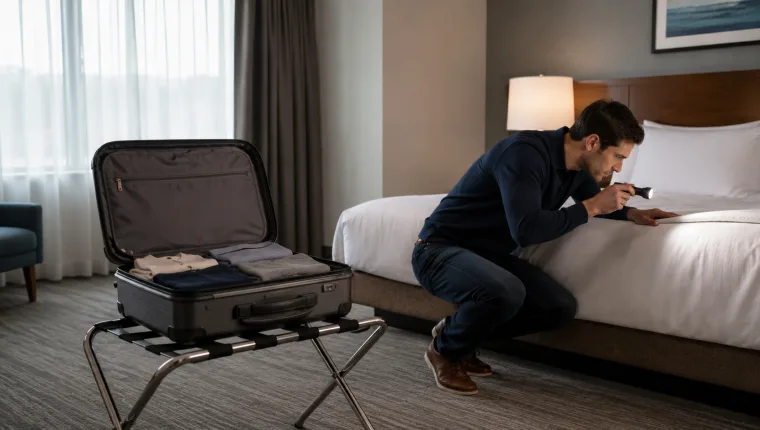
A hotel’s price, cleanliness, star rating, or brand does not determine whether bed bugs can be present. The goal is not to conduct a destructive inspection but to check the most important locations before unpacking.
Before Placing Luggage in the Room
- Keep luggage closed.
- Place it on a hard, elevated surface away from the bed while inspecting.
- Do not place bags on the mattress, upholstered chair, or carpet.
- Inspect the luggage rack before using it.
The EPA recommends inspecting hotel luggage racks and using them rather than placing luggage on a bed or floor.
Inspect the Bed Area
Use a flashlight and examine:
- Visible mattress seams and piping
- Sheets near the head of the bed
- Accessible headboard edges
- Bed-frame joints that can be viewed safely
- Nightstand cracks close to the bed
- The luggage rack
Look for live insects, dark spotting, eggs, cast skins, or reddish stains.
Do not dismantle hotel furniture, remove electrical covers, or damage the room.
Keep Belongings Organized During the Stay
- Keep the suitcase closed when not in use.
- Use sealable bags for clothing.
- Keep dirty laundry contained.
- Avoid spreading clothing across beds, couches, and floors.
- Keep bags away from walls and upholstered furniture.
What to Do When You Find Suspicious Evidence
- Photograph the evidence without crushing it.
- Capture a specimen when it can be done safely.
- Keep luggage closed and away from the suspected area.
- Notify hotel or property management.
- Request a room that is not directly beside, above, or below the suspected room when possible.
- Inspect the replacement room before unpacking.
A stain or skin reaction alone does not prove that the room has bed bugs.
What to Do With Luggage After Travel
Returning home is a critical point because a bed bug carried in luggage can be transferred to a bedroom before it is noticed.
Unpack Away From the Bed
Use an area with a hard, easy-to-inspect floor when practical. Avoid placing the suitcase on the bed or couch.
Contain Clothing
Move clothing in sealed bags rather than carrying loose piles through the home.
For suitable textiles:
- Follow the fabric-care instructions.
- Use a dryer cycle capable of treating the items when exposure is suspected.
- Do not rely on washing alone as the primary lethal step.
- Place treated items in a clean bag or container.
The EPA notes that sustained high dryer heat can kill bed bugs, while washing alone may not eliminate every life stage.
Inspect the Suitcase
Examine:
- Seams
- Zippers
- Pockets
- Wheel housings
- Handles
- Lining folds
- Hard-shell joints
Vacuum accessible areas and dispose of the contents carefully. Store luggage away from beds and couches rather than beneath a bed.
Hotel-Room Inspection and Luggage Workflow
Secondhand Furniture and Bed Bug Prevention
Used mattresses, couches, recliners, bed frames, nightstands, and upholstered furniture are higher-risk items because bed bugs can hide deep inside them.
The EPA recommends checking secondhand furniture for signs of infestation before bringing it into a home.
Inspect Before Transport
Use a flashlight to examine:
- Seams and folds
- Underside fabric
- Furniture joints
- Screw holes
- Staples
- Drawer joints
- Hollow tubing
- Reclining mechanisms
Avoid High-Risk Items
Do not take upholstered furniture or mattresses:
- From curbs
- From buildings with known infestations
- When the source cannot be identified
- When the furniture cannot be inspected fully
- When dark spotting, cast skins, eggs, or live insects are present
A quick surface spray does not make infested furniture safe. Bed bugs may remain inside inaccessible frames and folds.
Shared Laundry Facilities
Bed bugs do not live inside washing machines as a normal habitat, but they can be transported in clothing, laundry bags, baskets, hampers, and items placed on shared surfaces.
The EPA recommends:
- Transporting laundry in sealed plastic bags
- Using a new clean bag for the return trip when an infestation is active
- Moving dried items directly into the clean bag
- Folding laundry at home rather than on shared tables when practical
Also inspect and clean hampers, baskets, carts, and reusable bags.
Bed Bug Prevention in Apartments
Bed bugs in multifamily buildings may move through structural connections or be transported through hallways, laundry rooms, storage areas, and furniture movement.
Report Evidence Promptly
When a specimen is confirmed:
- Notify the landlord or property manager in writing.
- Provide photographs and the specimen when requested.
- Record the date and location.
- Follow the building’s inspection process.
Local landlord, tenant, reporting, and treatment responsibilities vary by jurisdiction.
Coordinate Nearby Inspections
Depending on the infestation and building design, units beside, above, and below the affected apartment may need inspection.
Treating one apartment without investigating connected activity can result in continuing movement or reinfestation.
Reduce Structural Routes
After inspection and treatment planning, appropriate maintenance may include:
- Door sweeps
- Sealing baseboard gaps
- Sealing utility penetrations
- Repairing wall and floor cracks
- Managing shared storage
Do not seal active harborages or structural gaps without coordinating with the treatment provider.
Visitors, Guests, and Social Situations
Bed bug prevention should be handled without shaming people. Bed bugs are not evidence of poor hygiene or irresponsible behavior.
When a visitor has a known active infestation, practical precautions may include:
- Using a designated hard-surface area for bags and coats
- Avoiding loose belongings on beds and upholstered furniture
- Using washable or easy-to-inspect seating where practical
- Inspecting the area after the visit
- Vacuuming accessible surfaces
- Monitoring rather than applying pesticide automatically
A brief visit does not mean that bed bugs were transferred. Treatment without physical evidence is generally not justified.
Mattress and Box-Spring Encasements
A bed bug-rated encasement completely surrounds a mattress or box spring.
Encasements can:
- Trap bed bugs already inside
- Reduce hiding places
- Create a lighter inspection surface
- Protect a treated mattress from becoming a complex harborage
Encasements cannot:
- Prevent bed bugs from entering the room
- Eliminate insects in the bed frame or walls
- Replace treatment
- Stop bed bugs from hiding on the outside surface
Choose a product designed and labeled for bed bug management, with a secure zipper and reinforced closure. Inspect it regularly for tears, open zippers, and trapped fabric.
Bed Bug Interceptors
Interceptors are passive pitfall monitors installed beneath compatible furniture legs.
They can help:
- Detect activity
- Reduce access from the floor to an isolated bed
- Measure treatment progress
- Monitor after travel or professional service
The bed must be moved away from walls, and bedding, cords, curtains, and furniture must not create alternative bridges.
An empty interceptor does not prove that no bed bugs are present. See our bed bug interceptor guide for placement and interpretation.
Bed Bug Prevention After Treatment
Prevention after treatment means detecting survivors or reinfestation before activity becomes widespread.
Complete Every Follow-Up
Do not cancel scheduled visits simply because bites or sightings stop. Eggs, hidden nymphs, or activity in adjoining areas may remain.
Keep Monitoring Devices in Place
Continue using interceptors or other professional monitors according to the treatment plan.
Do Not Reintroduce Untreated Belongings
Items stored in bags, vehicles, storage units, or untreated rooms should not be returned automatically. Follow the provider’s written release process.
Inspect Encasements and Furniture
Check for:
- Tears
- Open zippers
- New fecal spots
- Live insects
- Cast skins
- Interceptor captures
Avoid Preventive Pesticide Reapplication
Do not continue applying products “just in case” beyond the label or professional plan. Unnecessary applications can increase exposure, damage surfaces, interfere with monitors, and complicate identification.
For method and pricing comparisons, see our bed bug treatment cost guide and bed bug heat treatment cost guide.
Products and Barriers: What They Can and Cannot Do
| Product or barrier | Potential role | What it cannot guarantee |
|---|---|---|
| Mattress encasement | Reduces mattress harborages and simplifies inspection | Cannot prevent room entry or treat the bed frame |
| Bed bug interceptor | Monitors movement beneath furniture legs | Cannot detect every insect or treat furniture interiors |
| Luggage liner or bag | Helps contain clothing and belongings | Cannot protect an open or improperly sealed suitcase |
| Portable heat chamber | May treat compatible belongings according to manufacturer instructions | Cannot safely treat every item and is not a whole-room treatment |
| Vacuum | Removes accessible insects and debris | Cannot reach every egg or hidden harborage |
| Preventive pesticide spray | May have a labeled role in a professional program | Cannot guarantee prevention and may be unnecessary without evidence |
| Essential oils or repellents | May alter behavior temporarily under limited conditions | Cannot reliably prevent introduction or infestation |
Portable Heating Devices
Portable heat chambers are designed to treat compatible belongings rather than entire rooms.
Potential uses include:
- Luggage
- Shoes
- Books
- Small household items
- Selected travel belongings
Not every item can be heated safely. Batteries, electronics, medications, aerosols, cosmetics, artwork, musical instruments, and heat-sensitive materials may be damaged or create hazards.
The EPA notes that portable heating chambers are not regulated by EPA or another federal agency. Follow the manufacturer’s directions, loading limits, monitoring requirements, and prohibited-item list. Never create an improvised heating chamber.
Seasonal and Trigger-Based Prevention Calendar
Bed bugs can be introduced at any time of year. The calendar below is based on common travel and household events rather than a biological bed bug season.
| Period or trigger | Recommended action |
|---|---|
| Before major travel | Pack sealable laundry bags, a flashlight, and a travel inspection checklist |
| After every overnight stay | Inspect luggage, contain clothing, process suitable textiles, and monitor the bed area |
| Spring moving season | Inspect used furniture, moving blankets, storage units, and delivery items |
| Summer travel peak | Increase luggage precautions and post-trip inspections |
| Back-to-school or dorm move-in | Inspect mattresses, furniture, bags, and shared laundry practices |
| Holiday visitor season | Keep guest luggage off beds and inspect guest sleeping areas afterward |
| After nearby apartment activity | Inspect, monitor, document, and follow property-management instructions |
| After professional treatment | Maintain interceptors, complete follow-ups, and inspect encasements |
How to Know Whether Prevention Is Working
Prevention cannot be measured by bites alone. Use several evidence types:
- No confirmed specimens
- No new fecal spotting
- No eggs or new cast skins
- No interceptor or monitor captures
- No spread to additional furniture or rooms
- No recurring activity after travel or treatment
A period without captures reduces concern but does not provide an absolute guarantee, particularly when the infestation risk was recent or activity is very low.
When Professional Prevention Is Justified
Professional inspection or monitoring may be appropriate when:
- A neighboring apartment has confirmed bed bugs
- The property has a history of repeated infestations
- A hotel, shelter, dormitory, healthcare facility, or group residence needs a prevention protocol
- Used furniture must be evaluated
- A person has frequent occupational exposure
- Post-treatment activity remains uncertain
- Management needs documented monitoring
A professional prevention plan should define:
- Inspection areas
- Monitoring devices
- Reporting procedures
- Response thresholds
- Resident or staff education
- Follow-up frequency
- Actions after a confirmed specimen
Printable Bed Bug Travel Checklist
| Task | Completed |
|---|---|
| Pack a flashlight and sealable laundry bags | |
| Keep luggage closed while inspecting the room | |
| Inspect the luggage rack | |
| Inspect mattress seams and the headboard area | |
| Keep luggage away from beds and upholstered furniture | |
| Contain dirty laundry | |
| Document and report suspicious evidence | |
| Unpack away from bedrooms after returning | |
| Process suitable textiles using an appropriate dryer workflow | |
| Inspect and vacuum luggage seams | |
| Store luggage away from beds | |
| Monitor the sleeping area after travel |
Frequently Asked Questions
What is the best way to prevent bed bugs?
Reduce exposure during travel and furniture purchases, inspect sleeping areas, contain belongings, process suitable textiles after suspected exposure, and monitor for physical evidence.
Can bed bugs be prevented completely?
No method guarantees complete prevention. The goal is to reduce introduction risk and detect any hitchhiker before it spreads.
Are bed bugs caused by a dirty home?
No. Bed bugs can occur in clean or cluttered properties. Clutter provides additional hiding places but does not create the infestation.
Should I inspect every hotel room?
Yes. Conduct a brief inspection of the luggage rack, mattress seams, headboard area, and nearby furniture before unpacking.
Where should luggage be kept in a hotel?
Use an inspected luggage rack or another hard, elevated area away from the bed, walls, carpet, and upholstered furniture.
Should I keep clothing inside plastic bags while traveling?
Sealable bags can help separate clean and dirty clothing and reduce the number of exposed hiding places.
What should I do with clothing after travel?
Contain it during transport and follow the fabric-care instructions. When exposure is suspected, an appropriate high-heat dryer process may be used for suitable items.
Does washing clothing kill bed bugs?
Washing alone may not eliminate every life stage. Dryer heat is the more important lethal step for suitable textiles.
Should luggage be stored under the bed?
No. Store luggage away from sleeping areas where it can be inspected easily.
Can secondhand furniture bring bed bugs into a home?
Yes. Bed bugs and eggs can hide in upholstery, seams, joints, hollow frames, drawers, and underside fabric.
Can mattress encasements prevent bed bugs?
Encasements reduce mattress hiding places and help with inspection, but they cannot prevent bed bugs from entering the room.
Do bed bug interceptors prevent infestations?
They can monitor movement and reduce access through furniture legs, but they do not protect against every route or eliminate insects already inside furniture.
Should I use pesticide preventively?
Routine pesticide use without evidence is generally not a complete prevention strategy. Use products only according to their labels and a justified treatment plan.
Can essential oils prevent bed bugs?
Essential oils do not provide reliable protection against introductions or infestations and may create health, pet, or material risks.
What should apartment residents do after finding a bed bug?
Preserve the specimen, document the location, notify management promptly, avoid moving belongings, and follow the coordinated inspection process.
Can bed bugs move between apartments?
Yes. They may crawl through structural gaps or be transported through common areas and belongings.
How long should I monitor after treatment?
Continue monitoring through the provider’s clearance period and after the final service. Many plans maintain interceptors for extended post-treatment monitoring.
How do I know whether treatment was successful?
Use repeated inspections, monitors, live-insect findings, new fecal spots, eggs, and cast skins. Lack of bites alone does not prove elimination.
When should I call a bed bug exterminator?
Contact a professional after a confirmed specimen, repeated evidence, activity in multiple rooms, nearby apartment infestations, or uncertain post-treatment results.
Bed bug prevention reduces risk but cannot guarantee that bed bugs will never enter a property. Identification and treatment decisions should be based on physical evidence rather than bites alone. Pesticides must be used according to their EPA-registered labels.


