
Last reviewed: July 2026
Cockroaches are flattened, fast-moving insects that seek food, water, warmth, shelter, or suitable outdoor harborages. Some species, particularly German and brown-banded cockroaches, live and reproduce inside buildings. Others, including American, Oriental, smokybrown, Turkestan, and wood cockroaches, usually develop outdoors or in sewers, crawl spaces, drains, landscaping, and other protected environments before entering a home.
The most important first step is identifying the species. A small German cockroach found beside a refrigerator requires a different response from a large American cockroach that entered through a floor drain or an outdoor wood cockroach attracted to lights.
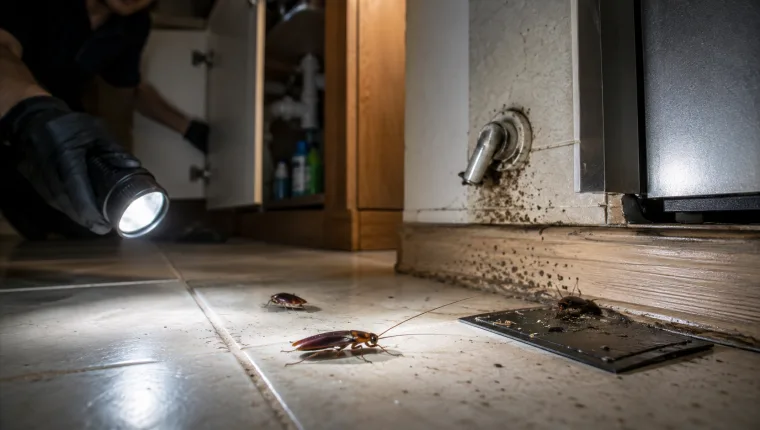
Reliable signs of an established indoor infestation include:
- Live adults and nymphs of different sizes
- Egg cases
- Dark fecal spotting near hiding places
- Shed skins
- Repeated sticky-trap captures
- Daytime activity
- Cockroaches found in several rooms or apartment units
Effective control normally combines species identification, inspection, sticky monitoring traps, food and moisture reduction, exclusion, cleaning, targeted baiting, and follow-up. Sanitation is essential, but cleaning alone may not eliminate an established infestation hiding inside appliances, cabinets, wall voids, drains, or connected apartment units.
For professional pricing, see our cockroach exterminator cost guide. For a detailed treatment pathway, visit our cockroach treatment guide.
- What Are Cockroaches?
- What Do Cockroaches Look Like?
- Common Types of Cockroaches
- German Cockroaches
- American Cockroaches
- Oriental Cockroaches
- Brown-Banded Cockroaches
- Smokybrown Cockroaches
- Turkestan Cockroaches
- Wood Cockroaches
- Do Cockroaches Fly?
- Signs of a Cockroach Infestation
- Where Cockroaches Hide
- How Cockroach Infestations Develop
- Cockroaches, Allergens, and Food Contamination
- What to Do When You Find a Cockroach
- How to Inspect for Cockroaches
- How to Use Sticky Cockroach Traps
- How to Get Rid of Cockroaches
- Cockroach Treatment Methods Compared
- Why Sanitation Alone May Not Eliminate Cockroaches
- Gel Baits vs. Cockroach Sprays
- Do Cockroach Foggers Work?
- Cockroach Control in Apartments
- DIY Cockroach Control vs. Professional Treatment
- Cockroach Treatment Safety
- Why Cockroach Treatments Fail
- How to Prevent Cockroaches
- Cockroach Sighting and Monitoring Log
- Frequently Asked Questions
- What do cockroaches look like?
- What is the most common indoor cockroach?
- Does one cockroach mean an infestation?
- What are reliable signs of a cockroach infestation?
- Where do cockroaches hide during the day?
- Why am I seeing cockroaches during the day?
- Can cockroaches fly?
- Are American cockroaches an indoor infestation?
- What is the fastest way to get rid of cockroaches?
- Do cockroach baits work?
- Why are cockroaches not eating the bait?
- Do sprays make cockroaches spread?
- Do cockroach foggers work?
- Can cleaning alone eliminate cockroaches?
- Can cockroaches live inside appliances?
- Can cockroaches move between apartments?
- Do cockroaches cause asthma?
- How long does cockroach treatment take?
- When should I call a cockroach exterminator?
- How much does professional cockroach treatment cost?
What Are Cockroaches?
Cockroaches are insects in the order Blattodea. They have:
- Six legs
- Long antennae
- A flattened body
- A shield-like section behind the head called the pronotum
- Chewing mouthparts
- Fast-running legs
Adults of many species have wings, but their ability and tendency to fly vary. German cockroaches rarely fly. American cockroaches may glide or fly short distances under favorable conditions. Smokybrown and some outdoor species are stronger flyers.
Cockroaches are generally most active at night. During the day, they hide in protected areas where their bodies can remain in contact with nearby surfaces.
Common hiding conditions include:
- Darkness
- Warmth
- Humidity
- Food residue
- Water
- Cracks and narrow spaces
- Cardboard and clutter
- Protected outdoor debris
The University of California Statewide Integrated Pest Management Program recommends identifying the cockroach species before choosing a control method because some species breed indoors while others usually invade from outdoor environments.
What Do Cockroaches Look Like?
Cockroach appearance varies by species, age, and whether the insect has recently fed.
Most household cockroaches share several features:
- Flattened oval body
- Long threadlike antennae
- Spiny legs
- Head partly covered by the pronotum
- Two short appendages called cerci at the rear of the body
Nymphs are immature cockroaches. They resemble smaller, wingless versions of adults and pass through several developmental stages before reaching maturity.
Young nymphs may look substantially different from adults. Their color, markings, and body proportions can also change as they develop.
Common Types of Cockroaches
| Species | Typical adult appearance | Common locations | Primary control focus |
|---|---|---|---|
| German cockroach | Small, light brown or tan, with two dark parallel stripes behind the head | Kitchens, bathrooms, appliances, cabinets, and food-service areas | Indoor inspection, monitoring, baiting, sanitation, and repeated follow-up |
| American cockroach | Large and reddish brown, often with a pale yellow border behind the head | Sewers, basements, crawl spaces, drains, utility rooms, and warm commercial buildings | Moisture, drains, entry points, exterior harborages, and targeted treatment |
| Oriental cockroach | Dark brown to nearly black, broad-bodied, and relatively slow-moving | Basements, drains, crawl spaces, garbage areas, and damp exterior locations | Moisture correction, exclusion, sanitation, and treatment of damp harborages |
| Brown-banded cockroach | Small, brown, with lighter bands across the wings or abdomen | Upper cabinets, furniture, electronics, closets, bedrooms, and dry warm areas | Whole-home inspection beyond kitchens and bathrooms |
| Smokybrown cockroach | Large, shiny, and uniformly dark brown or mahogany | Trees, gutters, roof areas, wood piles, landscaping, and humid structures | Exterior harborage, roof and vent access, moisture, and lighting |
| Turkestan cockroach | Males are brownish with developed wings; females are darker with shorter wings | Outdoor utility boxes, cracks, compost, debris, and landscape areas | Exterior cleanup, exclusion, monitoring, and targeted outdoor control |
| Wood cockroach | Medium-sized outdoor cockroach, often light to medium brown | Wood piles, leaf litter, fallen logs, and wooded areas | Exclusion, lighting changes, and removal of outdoor harborages |
German Cockroaches
German cockroaches are among the most common and difficult indoor cockroach pests. Adults are approximately one-half inch long and have two dark stripes on the pronotum behind the head.
They live and reproduce indoors, particularly where food, warmth, and moisture are available.
Common locations include:
- Refrigerators
- Stoves
- Dishwashers
- Microwaves
- Coffee makers
- Cabinet hinges
- Areas beneath sinks
- Wall and plumbing penetrations
- Bathroom vanities
- Food-storage rooms
German cockroaches reproduce relatively quickly and can spread through appliances, boxes, deliveries, furniture, and connected apartment units.
A female carries the egg case until shortly before hatching.
This behavior protects the developing eggs and helps explain why one treatment may not eliminate an established population.
Signs of German cockroaches commonly include:
- Small tan adults
- Dark nymphs with a lighter stripe along the back
- Egg cases
- Fine dark spotting around cabinet corners and appliances
- Activity in warm kitchen or bathroom areas
- Daytime sightings during heavier infestations
See our complete German cockroach identification and control guide.
American Cockroaches
American cockroaches are large, reddish-brown cockroaches that may reach approximately 1.5 inches or more in length. Adults typically have fully developed wings and a lighter border around the pronotum.
They are associated with warm, humid environments such as:
- Sewers
- Steam tunnels
- Boiler rooms
- Basements
- Crawl spaces
- Floor drains
- Commercial kitchens
- Utility rooms
- Garbage areas
One American cockroach inside a house does not necessarily indicate that a large colony is breeding in the kitchen. The insect may have entered through a drain, plumbing route, door, crawl space, or exterior opening.
Repeated sightings, nymphs, egg cases, or activity in protected indoor areas are more concerning.
Control should evaluate:
- Floor drains
- Sewer connections
- Plumbing penetrations
- Basement moisture
- Crawl-space conditions
- Exterior garbage
- Foundation openings
- Utility routes
See our American cockroach guide.
Oriental Cockroaches
Oriental cockroaches are dark brown to nearly black and have a broad, glossy body. Adults are commonly found in cool, damp environments.
Typical locations include:
- Basements
- Crawl spaces
- Floor drains
- Utility rooms
- Garbage areas
- Storm drains
- Damp landscaping
- Areas beneath porches or decks
These cockroaches are less agile climbers than German or American cockroaches but may enter at ground level through doors, foundation gaps, drains, and utility openings.
Long-term control frequently requires:
- Repairing leaks
- Improving drainage
- Reducing humidity
- Managing floor drains
- Removing damp organic material
- Sealing ground-level entry points
Brown-Banded Cockroaches
Brown-banded cockroaches are small indoor cockroaches with pale bands across their wings or abdomen. They prefer warmer and drier locations than German cockroaches.
They may hide in:
- Upper kitchen cabinets
- Furniture
- Closets
- Bedrooms
- Electronics
- Picture frames
- Ceiling fixtures
- Wall decorations
A kitchen-only inspection can miss a brown-banded infestation. Technicians should inspect rooms where people store belongings or where warm electrical equipment is present.
Smokybrown Cockroaches
Smokybrown cockroaches are large, glossy, and uniformly dark brown or mahogany. They are common in warm, humid regions and usually live outdoors.
Common harborages include:
- Trees
- Tree holes
- Roof gutters
- Attics
- Wood piles
- Mulch
- Leaf litter
- Sheds
- Moist landscape areas
They fly more readily than many other household cockroaches and may be attracted to exterior lighting.
Repeated indoor sightings may indicate access through:
- Roof vents
- Soffits
- Damaged screens
- Attic openings
- Doors
- Utility penetrations
Turkestan Cockroaches
Turkestan cockroaches are outdoor cockroaches found in parts of the western and southwestern United States. They may occupy:
- Water meter boxes
- Concrete cracks
- Compost
- Landscape debris
- Drainage areas
- Outdoor utility structures
Males and females look different. Adult males have more developed wings and may be mistaken for other flying cockroaches. Females are darker and have shorter wings.
These cockroaches may enter homes accidentally but typically reproduce in outdoor harborages.
Wood Cockroaches
Wood cockroaches usually live outdoors in wooded environments, leaf litter, fallen logs, bark, and firewood.
Males of some species fly toward lights and may enter homes during warmer months. They generally do not establish persistent indoor infestations because household conditions are not suitable for their normal development.
Control usually focuses on:
- Moving firewood away from the house
- Reducing leaf litter
- Repairing screens
- Sealing gaps
- Reducing unnecessary exterior lighting
- Keeping doors closed
Repeated pesticide treatment throughout the interior is usually unnecessary when outdoor wood cockroaches are entering accidentally.
Do Cockroaches Fly?
Some adult cockroaches can fly or glide, while others rarely use their wings.
| Species | Typical flying behavior |
|---|---|
| German cockroach | Adults have wings but rarely fly |
| American cockroach | May glide or fly short distances, particularly in warm conditions |
| Oriental cockroach | Does not normally fly |
| Brown-banded cockroach | Adult males may fly under suitable conditions |
| Smokybrown cockroach | A capable flyer commonly attracted to lights |
| Wood cockroach | Males of many species readily fly toward lights |
A flying cockroach inside the house may be an outdoor species rather than evidence of a German cockroach infestation.
Capture the insect for identification and inspect likely entry routes before choosing treatment.
See our flying cockroach identification guide.
Signs of a Cockroach Infestation
One cockroach sighting can justify inspection, but an established infestation is better evaluated using several forms of evidence.
| Evidence | Possible significance | Important limitation |
|---|---|---|
| Live adult cockroach | Confirms that a cockroach entered or occupies the area | One outdoor species does not automatically indicate an indoor colony |
| Nymphs | May indicate reproduction near the inspected area | Species identification is still necessary |
| Egg cases | Can indicate an established or developing population | Old empty cases may remain after activity ends |
| Fecal spotting | May identify frequently used harborages and travel routes | Other stains and insect droppings can look similar |
| Shed skins | Indicate that nymphs have developed in the area | Skins may remain after control |
| Repeated sticky-trap captures | Help measure location and continuing activity | Results depend on trap type, placement, and monitoring period |
| Daytime activity | May indicate a heavy population or disturbed harborages | One daytime sighting does not measure the full infestation |
| Odor | Heavy infestations may produce a noticeable smell | Odor is subjective and not species-specific |
Cockroach Droppings
Cockroach fecal material varies by species and size.
Small German or brown-banded cockroach droppings may resemble:
- Black pepper
- Coffee grounds
- Dark ink-like spots
Larger cockroach droppings may appear cylindrical or pellet-like and can be mistaken for mouse droppings.
Fecal spotting is commonly concentrated around:
- Cabinet corners
- Appliance edges
- Door hinges
- Wall-floor junctions
- Plumbing openings
- Protected cracks
Cockroach Egg Cases
A cockroach egg case is called an ootheca. Its size, shape, color, and placement vary by species.
German cockroach females carry the egg case until close to hatching. Other species may attach or deposit egg cases in protected locations.
Finding an egg case does not show how many live cockroaches remain, but it should prompt a wider inspection.
Daytime Cockroach Sightings
Cockroaches are generally nocturnal. Daytime sightings may occur when:
- The population is large
- Harborages are crowded
- Food or water is limited
- A hiding place was disturbed
- A pesticide application dispersed activity
- An outdoor cockroach entered accidentally
Do not estimate infestation size from a daytime sighting alone. Use monitors and physical evidence.
See our complete cockroach infestation signs guide.
Where Cockroaches Hide
Kitchen Hiding Places
- Behind refrigerators
- Refrigerator motors and drip pans
- Stove and oven cavities
- Dishwashers
- Microwaves and coffee makers
- Cabinet hinges
- Drawer joints
- Areas beneath sinks
- Plumbing penetrations
- Trash and recycling areas
Bathroom Hiding Places
- Vanity cabinets
- Plumbing openings
- Areas behind toilets
- Bathtub access panels
- Floor drains
- Warm utility chases
Basement and Crawl-Space Hiding Places
- Damp foundation areas
- Floor drains
- Utility rooms
- Cardboard storage
- Plumbing leaks
- Wall and floor cracks
- Insulation and construction voids
Bedrooms and Living Rooms
Brown-banded cockroaches and a spreading German cockroach infestation may occupy:
- Furniture
- Closets
- Electronics
- Picture frames
- Boxes
- Food or drink areas
Exterior Hiding Places
- Mulch
- Leaf litter
- Firewood
- Tree holes
- Storm drains
- Water meter boxes
- Garbage containers
- Compost
- Roof gutters
- Areas beneath decks
How Cockroach Infestations Develop
An indoor infestation may begin when cockroaches or egg cases enter through:
- Cardboard boxes
- Grocery deliveries
- Used appliances
- Furniture
- Luggage
- Restaurant or warehouse shipments
- Connected apartment units
- Plumbing and utility routes
Outdoor species may enter through:
- Open doors
- Damaged screens
- Foundation gaps
- Floor drains
- Roof vents
- Soffits
- Utility penetrations
- Garage doors
Once indoors, species such as German and brown-banded cockroaches can reproduce when they have access to food, moisture, warmth, and protected harborages.
Common supporting conditions include:
- Grease beneath appliances
- Food crumbs
- Pet food
- Leaking plumbing
- Condensation
- Cardboard
- Clutter
- Unsealed garbage
- Cracks in cabinets and walls
Cockroaches, Allergens, and Food Contamination
Cockroach feces, saliva, shed skins, and body fragments contain proteins that may trigger allergies or asthma symptoms in sensitive people.
The EPA identifies cockroach debris as an important indoor allergen, particularly in environments occupied by children.
The Centers for Disease Control and Prevention recommends reducing food and water sources, cleaning spills, storing food in airtight containers, sealing cracks, and avoiding sprays and foggers around people with asthma.
Cockroaches may also move through garbage, drains, food-storage areas, and food-preparation surfaces. Their bodies and fecal material can contribute to food contamination.
Clean and disinfect food-contact surfaces according to the surface and product instructions. Discard exposed food when contamination is suspected.
Seek medical advice for asthma attacks, severe allergic reactions, breathing difficulty, or other health concerns. Pest identification cannot be made from respiratory or skin symptoms alone.
What to Do When You Find a Cockroach
- Capture the specimen when possible. Use a sealed clear container or clear tape.
- Record the location. Note the room, time, and exact area.
- Photograph the insect. Include a ruler or coin for scale.
- Inspect nearby food and water sources.
- Place sticky monitoring traps. Position them against walls and near suspected harborages.
- Avoid immediately spraying the entire room.
- Check connected areas. Inspect adjoining cabinets, appliances, bathrooms, or apartment units.
- Preserve egg cases or shed skins.
- Notify property management. Apartment residents should report repeated activity in writing.
- Arrange professional identification. This is especially important for small indoor cockroaches and recurring sightings.
How to Inspect for Cockroaches
Useful tools include:
- Flashlight
- Sticky monitoring traps
- Inspection mirror
- Clear specimen container
- Disposable gloves
- Camera
- Notebook or monitoring log
Start at the Sighting Location
Inspect the area where the cockroach was found, then expand to nearby food, water, warmth, and shelter.
Inspect Appliances
Check accessible areas around:
- Refrigerators
- Stoves
- Dishwashers
- Microwaves
- Toasters
- Coffee makers
- Water heaters
Disconnect or move appliances only when it can be done safely. Do not apply pesticide inside electrical equipment unless the product label specifically permits that use.
Inspect Cabinets and Plumbing
Look around:
- Hinges
- Drawer tracks
- Screw holes
- Cabinet corners
- Pipe penetrations
- Areas beneath sinks
- Water-damaged wood
Inspect Exterior Entry Points
Large outdoor cockroaches require an inspection of:
- Doors and thresholds
- Foundation gaps
- Drains
- Utility openings
- Roof vents
- Crawl-space vents
- Garbage areas
- Mulch and leaf litter
How to Use Sticky Cockroach Traps
Sticky traps are valuable for identification, locating activity, and measuring treatment progress.
Place traps:
- Against walls
- Beneath or beside appliances
- Inside sink cabinets
- Near garbage areas
- Behind toilets
- Near floor drains
- Along suspected travel routes
Number each trap and record:
- Placement date
- Location
- Species or appearance
- Adults and nymphs captured
- Inspection date
One trap in the middle of a room is unlikely to describe the full infestation. Cockroaches commonly travel along edges and protected routes.
How to Get Rid of Cockroaches
Successful cockroach control normally uses Integrated Pest Management rather than one spray or product.
The EPA’s Integrated Pest Management guidance emphasizes pest identification, monitoring, prevention, targeted control, and evaluation.
1. Identify the Species
Determine whether the cockroach breeds indoors or is entering from an exterior harborage.
2. Locate Activity With Monitors
Use sticky traps to identify hotspots and measure progress.
3. Reduce Food
- Clean grease and crumbs
- Store food in sealed containers
- Clean beneath appliances
- Remove garbage regularly
- Store pet food securely
- Avoid leaving dirty dishes overnight
4. Reduce Water
- Repair leaks
- Dry sinks and counters
- Empty refrigerator drip pans when appropriate
- Correct condensation
- Manage floor drains
- Avoid leaving pet water beside active harborages overnight when practical
5. Reduce Shelter
- Remove unnecessary cardboard
- Reduce clutter
- Seal cabinet cracks
- Repair wall gaps
- Remove exterior debris
6. Exclude Entry Routes
- Install door sweeps
- Repair screens
- Seal utility gaps
- Repair foundation openings
- Screen vents where appropriate
- Manage drains
7. Use Targeted Treatment
Depending on the species and infestation, treatment may include:
- Gel bait
- Bait stations
- Insect growth regulators
- Desiccant or insecticidal dust
- Targeted crack-and-crevice liquid treatment
- Vacuum removal
- Exterior treatment
8. Reinspect and Adjust
Continue checking traps and harborages. Replace or reposition bait and monitors based on the results.
Cockroach Treatment Methods Compared
| Method | Where it may fit | Main limitation |
|---|---|---|
| Sticky monitors | Identification, locating hotspots, and measuring progress | Monitoring alone does not eliminate an established infestation |
| Gel bait | Indoor cockroaches hiding in cracks, cabinets, and appliances | Poor placement, contamination, competing food, or resistance can reduce performance |
| Bait stations | Protected placement where gel bait is unsuitable | Must be positioned close to activity |
| Insect growth regulator | Supporting longer-term population reduction | Does not provide immediate elimination |
| Desiccant or insecticidal dust | Selected cracks, voids, and protected harborages | Excessive or exposed application can be ineffective or create avoidable exposure |
| Targeted liquid treatment | Specific labeled cracks, crevices, and exterior areas | Broad spraying may disperse cockroaches or interfere with bait |
| Vacuum removal | Heavy visible concentrations and allergen reduction | Cannot reach every hidden insect or egg case |
| Exclusion | Outdoor species and movement between rooms or units | Does not eliminate cockroaches already reproducing indoors |
| Total-release fogger | Generally not recommended as a cockroach solution | Fails to penetrate many harborages and may create exposure and fire hazards |
Why Sanitation Alone May Not Eliminate Cockroaches
Cleaning removes food, water, and shelter and makes other treatments more effective. It may substantially reduce occasional cockroach activity.
However, an established indoor infestation may survive because cockroaches can feed on small amounts of:
- Grease
- Crumbs
- Cardboard adhesive
- Pet food residue
- Organic debris
- Materials inside inaccessible voids
They may also remain inside appliances, wall voids, neighboring apartments, plumbing chases, or other areas that ordinary cleaning cannot reach.
Sanitation should therefore be combined with monitoring, exclusion, and targeted treatment.
Gel Baits vs. Cockroach Sprays
Gel baits are often useful for German and brown-banded cockroach infestations because they can be placed close to hidden harborages.
Bait may fail when:
- It is placed far from activity
- Too few placements are used
- Food competes with the bait
- Cleaning products contaminate it
- Repellent sprays are applied nearby
- The bait dries
- The population avoids or resists a bait formulation
Liquid sprays may be appropriate for selected labeled locations, exterior entry routes, or specific cracks and crevices. Routine broadcast spraying throughout kitchens and living spaces is not a substitute for inspection and monitoring.
See our cockroach bait, trap, dust, and spray comparison.
Do Cockroach Foggers Work?
Total-release foggers, often called bug bombs, release pesticide into exposed air. They generally do not penetrate deeply into:
- Cabinet voids
- Wall cracks
- Appliances
- Plumbing penetrations
- Other protected harborages
Foggers can create fire, explosion, pesticide-exposure, and respiratory risks when used incorrectly.
The CDC advises people with asthma to avoid sprays and foggers because they may trigger asthma attacks.
See our cockroach fogger and fumigation guide.
Cockroach Control in Apartments
Cockroaches can move between apartments through:
- Plumbing penetrations
- Electrical openings
- Shared walls
- Hallways
- Trash rooms
- Laundry rooms
- Furniture and appliances
Treating one unit may provide temporary improvement while activity continues in neighboring apartments or common areas.
A coordinated multifamily program may require:
- Inspection of the reported unit
- Inspection of units beside, above, and below
- Sticky monitoring traps
- Resident preparation
- Targeted bait treatment
- Shared-area sanitation
- Utility-gap exclusion
- Repeated follow-up
The EPA’s resources for housing managers emphasize cooperation among residents, maintenance staff, housing management, and pest professionals.
Apartment residents should report repeated activity promptly in writing and preserve specimens or photographs.
DIY Cockroach Control vs. Professional Treatment
DIY Control May Be Reasonable When:
- One outdoor cockroach entered accidentally
- The species has been identified
- Activity is limited
- Food, moisture, and entry conditions can be corrected
- Products can be used safely according to the label
- Sticky-trap counts decline steadily
Professional Treatment Is More Appropriate When:
- German cockroach adults and nymphs are present
- Cockroaches appear during daylight
- Several rooms are affected
- Egg cases are present
- Cockroaches are inside appliances
- DIY baiting has failed
- Several apartment units may be involved
- Children or pets complicate product placement
- Asthma or pesticide-safety concerns exist
- The species cannot be identified confidently
Cockroach Treatment Safety
Pesticides must be used according to the EPA-registered product label.
Before treatment, tell the pest-control company about:
- Children
- Pregnant occupants
- Pets
- Aquariums and terrariums
- People with asthma
- Respiratory or chemical sensitivities
- Food-preparation areas
Ask for:
- Product names
- EPA registration numbers
- Application locations
- Preparation instructions
- Re-entry instructions
- Pet precautions
- Cleaning instructions
Do not:
- Use outdoor pesticides indoors
- Apply products to dishes or food-contact surfaces unless explicitly permitted by the label
- Use more product than directed
- Mix pesticides without label instructions
- Place bait where children or pets can access it
- Apply liquids inside electrical equipment
Why Cockroach Treatments Fail
- The species was incorrectly identified
- The inspection missed major harborages
- Only visible cockroaches were treated
- Bait was placed too far from activity
- Food and water remained available
- Repellent sprays interfered with bait
- Egg cases hatched after treatment
- Follow-up visits were not completed
- Resistance reduced product performance
- Connected apartment units remained untreated
- Exterior entry points were not sealed
- Moisture and drains continued supporting activity
A treatment plan should change when monitoring shows that activity is not declining.
How to Prevent Cockroaches
Food Management
- Store food in sealed containers
- Clean crumbs and spills promptly
- Clean beneath appliances
- Keep garbage covered
- Limit cardboard accumulation
- Store pet food securely
Moisture Management
- Repair plumbing leaks
- Correct condensation
- Dry wet cabinets
- Maintain drains
- Improve ventilation
- Correct exterior standing water
Exclusion
- Seal plumbing and utility gaps
- Install door sweeps
- Repair window screens
- Screen vents where appropriate
- Seal foundation cracks
- Inspect deliveries and used appliances
Exterior Maintenance
- Move firewood away from the building
- Reduce leaf litter
- Manage mulch depth near the foundation
- Keep garbage areas clean
- Trim vegetation touching the structure
- Clean gutters
- Reduce unnecessary lights near entrances
Cockroach Sighting and Monitoring Log
| Date | Room or area | Exact location | Adult, nymph, or egg case | Day or night | Trap capture |
|---|---|---|---|---|---|
Frequently Asked Questions
What do cockroaches look like?
Cockroaches have flattened oval bodies, long antennae, six spiny legs, and a shield-like pronotum behind the head. Size and markings vary by species.
What is the most common indoor cockroach?
The German cockroach is one of the most common indoor species in the United States. It is small, tan, and has two dark stripes behind its head.
Does one cockroach mean an infestation?
Not always. One large outdoor cockroach may have entered accidentally. A German cockroach, nymph, egg case, or repeated indoor sighting is more concerning.
What are reliable signs of a cockroach infestation?
Reliable signs include live adults and nymphs, egg cases, shed skins, fecal spotting, and repeated sticky-trap captures.
Where do cockroaches hide during the day?
They commonly hide inside cracks, cabinets, appliances, plumbing openings, drains, wall voids, cardboard, and other dark protected areas.
Why am I seeing cockroaches during the day?
Daytime activity may result from crowding, a heavy infestation, disturbed harborages, limited food or water, pesticide use, or an outdoor cockroach entering accidentally.
Can cockroaches fly?
Some species can fly or glide. Smokybrown and many wood cockroaches fly readily. German cockroaches have wings but rarely fly.
Are American cockroaches an indoor infestation?
They may live in sewers, basements, crawl spaces, drains, and warm commercial structures. One indoor sighting may be an invader, while nymphs and repeated activity suggest a nearby harborage.
What is the fastest way to get rid of cockroaches?
The most effective pathway depends on the species and infestation. Inspection, monitoring, sanitation, baiting, moisture correction, exclusion, and follow-up usually work better than one broad spray.
Do cockroach baits work?
Baits can be effective when placed close to harborages and protected from contamination. Competing food, poor placement, dried bait, sprays, or resistance may reduce performance.
Why are cockroaches not eating the bait?
The bait may be too far from activity, contaminated, dried, unattractive to that population, or competing with other food sources.
Do sprays make cockroaches spread?
Some repellent sprays may cause cockroaches to move away from treated areas and can interfere with bait programs.
Do cockroach foggers work?
Foggers generally do not reach deep harborages inside cracks, appliances, cabinets, and wall voids. They may also create exposure and fire risks.
Can cleaning alone eliminate cockroaches?
Cleaning is essential but may not eliminate an established infestation hiding inside appliances, walls, drains, or connected units. It should be combined with monitoring and targeted control.
Can cockroaches live inside appliances?
Yes. German and brown-banded cockroaches may live inside or around refrigerators, stoves, dishwashers, microwaves, coffee makers, and electronics.
Can cockroaches move between apartments?
Yes. They may travel through plumbing, electrical openings, shared walls, hallways, and common areas or be transported in furniture and appliances.
Do cockroaches cause asthma?
Cockroach feces, saliva, shed skins, and body fragments contain allergens that may trigger or worsen asthma symptoms in sensitive people.
How long does cockroach treatment take?
Occasional outdoor cockroaches may be resolved quickly after entry points are corrected. Established German cockroach infestations often require several weeks, monitoring, and repeated treatment.
When should I call a cockroach exterminator?
Contact a professional when German cockroaches, nymphs, egg cases, daytime activity, multiple affected rooms, appliance infestations, or recurring apartment problems are present.
How much does professional cockroach treatment cost?
Residential treatment commonly costs approximately $100–$600, while severe or multiunit infestations may cost more. See our cockroach exterminator cost guide.
Cockroach identification should be based on specimens and physical evidence. Pesticides must be used according to the EPA-registered product label. Seek medical care for breathing difficulty, severe allergic reactions, or other health concerns.


