Last reviewed: July 2026
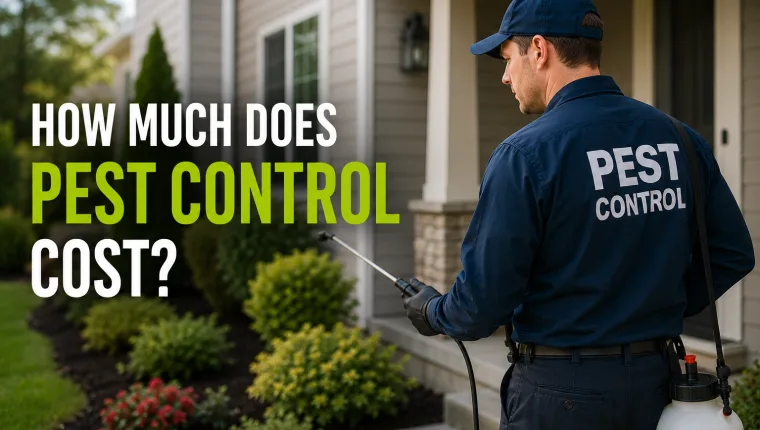
A one-time general pest control treatment for common household pests typically costs $100–$600, and most homeowners land in the $150–$500 range. A recurring plan usually runs $40–$100 in monthly billing, covering quarterly visits. Specialty problems — termites, bed bugs, and larger rodent jobs — are priced separately and covered below.
The single most important thing to understand before comparing any two quotes: general pest control and specialty pest control are different services with different pricing logic. A quote for ants and spiders isn’t comparable to a termite or bed bug quote, and “per visit,” “per month,” and “per year” pricing can describe the same plan very differently depending on how a company presents it.
- Average Pest Control Cost at a Glance
- How We Approach These Cost Ranges
- Pest Control Cost by Service Frequency
- Pest Control Cost by Type of Pest
- What Affects Pest Control Prices?
- What's Included in a Typical Pest Control Quote?
- What's Usually Not Included?
- One-Time Pest Control vs. Recurring Service
- DIY Pest Control Cost vs. Professional Treatment
- How to Compare Pest Control Quotes
- How to Check a Pest Control Company
- When Professional Pest Control Is Worth the Cost
- Frequently Asked Questions
- How much is pest control for a 2,000-square-foot house?
- How much does pest control cost per month?
- Is quarterly pest control worth it?
- Is the first pest control visit more expensive?
- Are pest inspections free?
- Does general pest control include termites or bed bugs?
- How many visits does pest control take?
- Can you negotiate pest control prices?
- Does homeowners insurance cover pest removal?
- Should I choose a contract or a one-time service?
Average Pest Control Cost at a Glance
| Service | Typical cost | Important condition |
|---|---|---|
| One-time general service | $100–$600 | Common household pests (ants, spiders, roaches, occasional invaders); excludes specialty pests |
| Initial recurring-plan visit | $100–$300 | Often priced higher than later visits; includes inspection and first treatment |
| Monthly billing | $40–$100/month | May represent monthly payments for quarterly service, not monthly visits — confirm visit frequency |
| Quarterly visit | $100–$300 per visit | Annual total is typically $400–$1,200 before any initial fee |
| Pest inspection | $75–$450 | Varies widely by type — general inspection, termite inspection, and real-estate/WDO inspection are priced differently; often waived if you book treatment |
| Specialty treatment | Varies widely; commonly several hundred to several thousand dollars | Depends heavily on the pest (termites, bed bugs, rodent exclusion) and method — see the pest-specific breakdown below |
How We Approach These Cost Ranges
These figures are planning ranges, not a quote for your property, and they’re worth being upfront about:
- Ranges reflect prices and estimates reviewed in July 2026 for residential pest control in the United States.
- General household pest control is treated separately from specialty treatments (termites, bed bugs, rodent exclusion), because they don’t share a pricing model.
- Initial visits are treated separately from ongoing recurring visits, since the first visit typically includes a more thorough inspection and treatment.
- Ranges represent typical residential jobs of roughly 1,500–2,000 sq. ft. Larger, multi-story, or unusually difficult-to-access properties will fall outside these numbers in either direction.
- Figures do not include structural repairs, insulation replacement, or major exclusion carpentry unless specifically noted.
- Ranges are presented deliberately as ranges, not single averages, because published market pricing varies by region, property, and provider. This page is reviewed periodically, and the ranges are adjusted when market pricing shifts materially.
Pest Control Cost by Service Frequency
One-Time Pest Control Cost
A single visit for common pests — ants, spiders, occasional invaders, a minor roach sighting — typically runs $100–$600. This fits situations that are isolated and not expected to recur, like a seasonal ant trail or a single wasp nest. It does not fit termites, an active bed bug infestation, or an established rodent problem, which need a different scope entirely.
Initial Visit Cost (Recurring Plans)
Most recurring plans charge more for the first visit than for later ones, often $100–$300, because it includes a full inspection and the most intensive treatment. Some companies fold this into the first month’s payment; others bill it separately.
Ask directly whether the quoted monthly or quarterly price already includes the initial visit or adds it on top.
Monthly Pest Control Cost
Monthly billing generally runs $40–$100, but “monthly” often describes the payment schedule
, not the visit schedule — many “monthly” plans are actually serviced quarterly, with the cost spread into smaller monthly payments. Before comparing two “monthly” quotes, confirm how many actual visits are included per year.
Quarterly Pest Control Cost
Quarterly plans typically cost $100–$300 per visit, or roughly $400–$1,200 per year
across four visits, not counting the initial fee. Looking at the annual total rather than the per-visit price makes it much easier to compare a quarterly plan against a monthly-billed one.
Annual Pest Control Cost
Combining an initial service charge with ongoing visits, a standard recurring plan commonly totals approximately $500–$1,500 during the first year, before any specialty treatment. Ask each provider for a written first-year total, not just a per-visit or per-month figure, so you’re comparing full-year cost against full-year cost.
Pest Control Cost by Type of Pest
| Pest | Typical range | Notes |
|---|---|---|
| Ants, spiders, common invaders | $100–$400 | Usually covered under general pest plans |
| Cockroaches | $100–$500 | Higher for established infestations; see our cockroach treatment cost guide |
| Fleas | $100–$400 | Often requires treating yard and interior together |
| Wasps and hornets | $100–$400 | Higher for large, elevated, or multiple nests |
| Mosquitoes | $75–$150 per treatment | Usually a seasonal recurring service |
| Rodents (mice, rats) | $175–$655 | Basic trapping/baiting only — see mouse exterminator cost and rat control cost for exclusion and repair pricing |
| Bed bugs | $300–$4,000+ | Highly variable by method and scope — see our full bed bug treatment cost breakdown |
| Termites | $500–$5,000+ | Localized treatment vs. whole-structure fumigation are priced very differently — see termite treatment cost |
This page intentionally doesn’t try to resolve termite or bed bug pricing in full — both involve enough method-specific variation that they get their own dedicated cost guides, linked above.
Termite Treatment: Why the Range Is So Wide
A localized termite treatment for a contained problem can fall within a few hundred dollars to around $1,500. Whole-structure treatments, tenting, or fumigation are a different scope and commonly run $2,000–$5,000 depending on the size of the structure. Neither figure includes repairing termite damage itself, which is priced separately and can vary enormously depending on what’s affected structurally. A termite inspection is a separate, smaller cost that usually happens before any treatment is scoped or priced.
Bed Bugs: Room, Unit, and Whole-Home Are Different Jobs
Treating a single room typically starts in the low hundreds of dollars. A full apartment or small unit costs more, and a whole-home treatment can run into the thousands. Heat treatment, chemical treatment, and fumigation are priced differently from each other, and the EPA notes that very few infestations are controlled with only one treatment — most legitimate treatment plans include an inspection (see our bed bug inspection guide), an initial treatment, and at least one monitoring or follow-up visit.
Rodents: Basic Control vs. Exclusion and Cleanup
The $175–$655 range above covers inspection, trapping, and baiting — it does not include sealing entry points, attic or insulation work, sanitation and cleanup, or dead-animal removal. Those are commonly quoted as separate line items and can add substantially to the total, especially in attics or crawl spaces with an established problem.
What Affects Pest Control Prices?
No single factor dominates every situation — which variable matters most depends on the job. Pest type and infestation severity are usually among the most significant factors, but for a fumigation job, property size often drives the price more than anything else, and for rodent exclusion, the number and accessibility of entry points can matter more than the species involved.
Pest Type
General household pests share a pricing tier; termites, bed bugs, and wildlife sit in a different one entirely.
Infestation Severity
An early sighting costs less to resolve than an infestation that has spread through walls, multiple rooms, or adjoining units.
Home Size and Layout
More square footage, more stories, and more perimeter generally mean more product and labor time.
Treatment Method
Heat treatments, whole-structure fumigation, and specialized baiting systems cost more than standard chemical treatments.
Number of Visits
A plan with more scheduled visits and follow-ups costs more than a single treatment, but often costs less per visit.
Accessibility
Crawl spaces, attics, and hard-to-reach areas (elevated wasp nests, wall voids) increase labor time.
Geographic Location
Regional labor costs and pest pressure both shift pricing — humid, high-pest-pressure regions often see different baseline pricing than drier climates.
Emergency or Same-Day Service
Rush service commonly carries a premium over a scheduled appointment.
Repairs, Cleanup, and Exclusion
Sealing entry points, replacing damaged insulation, or cleaning contaminated areas are typically quoted separately from the pest treatment itself.
What’s Included in a Typical Pest Control Quote?
A standard quote generally covers: an inspection and pest identification, interior treatment where needed, exterior perimeter treatment, the products and materials used, and a written service report. Recurring plans usually also include scheduled follow-up visits and some form of monitoring. A warranty or guarantee period is common but varies by provider — get its exact terms in writing.
What’s Usually Not Included?
This is where homeowners are most often surprised by a second bill. Unless a quote explicitly says otherwise, expect these to be priced separately:
- Structural repairs from termite or rodent damage
- Insulation replacement
- Cleaning or sanitizing contaminated areas
- Dead-animal removal
- Major exclusion work (sealing multiple entry points, carpentry)
- Temporary lodging during fumigation or tenting
- Disposal of items that cannot be safely treated — furniture should not automatically be discarded solely because bed bugs are present
- Annual termite bond or warranty renewal
- After-hours or emergency service fees
- Specialty pests excluded from a general plan’s scope
One-Time Pest Control vs. Recurring Service
| Situation | One-time | Recurring plan |
|---|---|---|
| Isolated wasp nest | Usually the better fit | Typically unnecessary |
| Recurring ant problems | Possible short-term fix | Often better long-term value |
| Documented ongoing pest pressure | May provide temporary control | An IPM-based monitoring and prevention plan may be appropriate |
| Bed bugs | Requires a specialized plan | A general pest plan does not apply |
| Termites | Requires a specialized treatment | Ongoing monitoring or bond is separate |
Recurring visits often cost less individually than a one-time call because the initial inspection and the most intensive first treatment are already behind you by the time later visits happen. A recurring plan shouldn’t automatically mean calendar-based pesticide spraying regardless of activity. The EPA’s Integrated Pest Management approach prioritizes inspection, monitoring, exclusion, and sanitation, using targeted pesticide treatment when actual pest activity warrants it — ask a prospective provider whether their recurring service follows this model or defaults to routine spraying regardless of what’s actually present.
DIY Pest Control Cost vs. Professional Treatment
DIY products — baits, sprays, traps, and monitors — typically run $10–$60 per product. DIY can be a reasonable option when signs are limited and recent, no children or pets are exposed to the products used, entry points have been identified and sealed, and there’s no evidence of a nest, persistent activity, or droppings across multiple areas — a single mouse sighting doesn’t by itself confirm a small problem, so keep monitoring rather than assuming it’s resolved.
DIY is a poor fit for termites, an established bed bug infestation, wasp or hornet nests in hard-to-reach or high-traffic locations, or any situation where mishandling a pesticide product creates a real safety risk. The practical cost comparison isn’t just the product price against a service call — it’s the cost of a DIY attempt that doesn’t fully resolve the problem, which for termites and bed bugs in particular often means the infestation re-establishes and the eventual professional treatment costs more than early intervention would have.
How to Compare Pest Control Quotes
The lowest quote isn’t automatically the best value, and a substantially lower quote deserves closer review — particularly when it excludes inspection, follow-up visits, warranty coverage, or prevention work that other providers include. Use a simple side-by-side comparison:
| Quote item | Company A | Company B | Company C |
|---|---|---|---|
| Pest confirmed | |||
| Areas treated | |||
| Number of visits | |||
| Product/method | |||
| Follow-up included | |||
| Warranty | |||
| Contract length | |||
| Cancellation fee | |||
| Total first-year cost |
A remote estimate can be reasonable for standardized general pest plans based on square footage and pest type. Termite, bed bug, rodent-exclusion, and severe-infestation quotes should normally be confirmed with an in-person inspection before you sign anything.
How to Check a Pest Control Company
Before hiring, confirm: state pesticide applicator license, insurance coverage, a written scope of work, the product names, EPA registration numbers, and label directions that apply to the proposed treatment, warranty conditions in writing, and cancellation terms. The U.S. Environmental Protection Agency recommends comparing several companies, verifying licenses, and asking each one to explain the proposed treatment program — the problem identified, the method, the products, and any safety precautions — before agreeing to service. The National Pesticide Information Center similarly recommends getting written estimates from multiple companies and reviewing the terms of any multi-year contract before signing. For termite-specific work, the EPA also recommends confirming the company is licensed by your state and asking about product details and re-entry conditions for the treated home. Once you understand the quote structure, the next step is to find a qualified pest control company and compare licensing, inspection quality, methods, contract terms, and what each proposal actually includes.
When Professional Pest Control Is Worth the Cost
Professional treatment is generally the right call for termites and other structural pests, active bed bug infestations, recurring or established rodent problems, dangerous or hard-to-reach stinging-insect nests, infestations spanning multiple rooms, a failed DIY attempt, households with young children, pets, or other vulnerable occupants, an unidentified pest, commercial or rental properties, and real estate transactions requiring a pest inspection report.
Frequently Asked Questions
How much is pest control for a 2,000-square-foot house?
A one-time general treatment typically falls in the $150–$600 range for a home around that size; a recurring plan usually adds up to $450–$1,500 per year. Larger or harder-to-access properties can run higher.
How much does pest control cost per month?
Monthly billing is typically $40–$100, but confirm whether that reflects monthly visits or a monthly payment for quarterly service — the two are priced and delivered very differently.
Is quarterly pest control worth it?
For ongoing pest pressure common in many climates, quarterly service (roughly $400–$1,200/year) is often more cost-effective than repeated one-time calls, especially when follow-up callbacks are included.
Is the first pest control visit more expensive?
Often, yes. Initial visits are typically more expensive than later recurring visits because they include inspection, setup, and the first intensive treatment. A typical initial-service charge falls around $100–$300, but the exact difference varies by provider and plan.
Are pest inspections free?
Sometimes. Many companies waive the inspection fee if you book treatment, but a standalone inspection can run $75–$450 depending on the type (general, termite, or real-estate/WDO inspection).
Does general pest control include termites or bed bugs?
Usually not. Termites and bed bugs are typically priced and scheduled as specialty services, separate from a standard general pest plan.
How many visits does pest control take?
A one-time issue may resolve in a single visit. Recurring plans typically include quarterly or more frequent visits, and specialty treatments like bed bugs commonly require an initial visit plus at least one follow-up.
Can you negotiate pest control prices?
Multiple providers commonly compete on price for standard general pest plans, so comparing several written quotes is a reasonable way to find better terms. Specialty treatments (termites, bed bugs) leave less room for negotiation since pricing is tied more closely to scope and method.
Does homeowners insurance cover pest removal?
Usually not. Homeowners insurance typically doesn’t pay for pest removal or for damage caused directly by termites, insects, rats, or mice, because these losses are commonly treated as maintenance-related or expressly excluded. Policy language and possible coverage for a separate resulting loss can vary by insurer and state, so review your policy’s exclusions and ask your insurer directly before assuming a claim is or isn’t covered.
Should I choose a contract or a one-time service?
If the pest problem is isolated and unlikely to recur, a one-time service is usually sufficient. If your property has ongoing pest pressure or you want a standing inspection relationship, a recurring plan is generally the better value over time.
Pricing ranges reflect general U.S. market patterns reviewed in July 2026 and are provided for planning purposes only. They are not a quote. Request an itemized, written estimate from a licensed local provider before agreeing to any service.
Written and researched by Alejandro Daniel José
Founder & Editor, Pest Decoded
Alejandro Daniel José is the founder and editor of Pest Decoded, an independent consumer information project focused on making pest identification, treatment options, service pricing, and hiring decisions easier to understand. He researches, writes, and edits every guide using official sources and clearly disclosed editorial methods. Pest Decoded distinguishes editorial research from professional diagnosis, inspection, treatment, and legal or insurance advice — consult a licensed local professional when a pest problem may affect health, safety, property, or structural integrity.


