
Last reviewed: July 2026
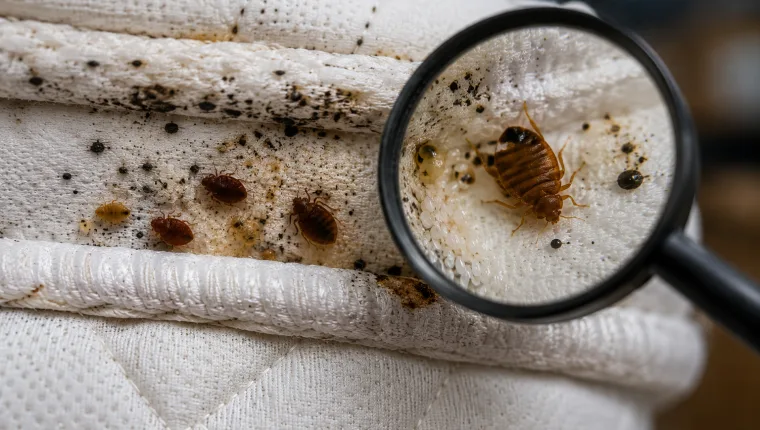
Bed bugs are small, flat, blood-feeding insects that usually hide close to places where people sleep or rest. Adults are reddish brown, wingless, and approximately the size and shape of a small apple seed. Younger bed bugs, called nymphs, are smaller and may appear pale or nearly transparent before feeding.
The most reliable signs of bed bugs are not bites. Look for:
- Live bed bugs
- Dark fecal spots
- Pale shed skins
- Small white eggs or eggshells
- Reddish stains caused by crushed insects
- Repeated captures in bed bug interceptors or monitoring devices
Skin reactions alone cannot confirm bed bugs. Mosquitoes, fleas, mites, allergic reactions, skin conditions, and other causes can produce similar marks.
When you suspect bed bugs, avoid immediately spraying the room, using a bug bomb, discarding the bed, or moving belongings into another room. Preserve the evidence, limit the movement of potentially infested items, inspect the sleeping area, and arrange a professional inspection when the pest cannot be confirmed.
Use our bed bug inspection guide for a complete room-by-room inspection process. When an infestation is confirmed, compare options in our bed bug treatment cost guide.
- What Are Bed Bugs?
- What Do Bed Bugs Look Like?
- Reliable Signs of Bed Bugs
- Are Bed Bug Bites a Reliable Sign?
- Where Do Bed Bugs Hide?
- How Do Bed Bug Infestations Develop?
- Can Bed Bugs Fly or Jump?
- Do Bed Bugs Live on People or Pets?
- Immediate Steps When You Find a Possible Bed Bug
- How to Inspect for Bed Bugs
- Professional Bed Bug Inspections
- Tiny Bugs in Bed That May Not Be Bed Bugs
- How to Get Rid of Bed Bugs
- Why Bed Bug Treatments Fail
- Bed Bug Treatment Preparation
- Bed Bug Control in Apartments
- How to Prevent Bed Bugs
- Common Bed Bug Control Mistakes
- When to Call a Professional
- Bed Bug Evidence Log
- Frequently Asked Questions
- What do bed bugs look like?
- What is the most reliable sign of bed bugs?
- Can you identify bed bugs from bites?
- Where do bed bugs hide first?
- Do bed bugs live inside mattresses?
- Can bed bugs fly?
- Can bed bugs jump?
- Do bed bugs live on people?
- Can bed bugs live on pets?
- Are bed bugs caused by poor hygiene?
- Should I throw away my mattress?
- Should I sleep in another room?
- Do bed bug foggers work?
- Can bed bugs survive washing?
- Does steam kill bed bugs?
- Does professional heat always eliminate bed bugs?
- How quickly do bed bugs spread?
- Can bed bugs move between apartments?
- How do I know whether treatment worked?
- How much does professional bed bug treatment cost?
- When should I contact a professional?
What Are Bed Bugs?
Bed bugs are insects in the genus Cimex. The species most commonly associated with people is Cimex lectularius.
They feed primarily at night, although they may feed during the day when a host is available. They do not live on the human body. After feeding, they normally return to cracks, furniture joints, mattress seams, wall edges, or other protected hiding places.
Bed bugs can infest:
- Houses
- Apartments
- Hotels
- Dormitories
- Shelters
- Hospitals
- Nursing homes
- Offices
- Schools
- Public transportation
- Furniture and storage facilities
An infestation is not proof of poor hygiene. Bed bugs can be introduced through luggage, furniture, clothing, boxes, visitors
, or movement between connected rooms and apartment units.
The U.S. Environmental Protection Agency classifies bed bugs as a public-health pest and recommends an Integrated Pest Management approach combining inspection, monitoring, physical controls
, preparation, and carefully selected pesticide treatment when needed.
What Do Bed Bugs Look Like?
Bed bugs change in size and appearance as they develop. Correct identification is important because carpet beetles, cockroach nymphs, booklice, fleas, ticks, mites
, and other small insects are frequently mistaken for bed bugs.
| Life stage | Typical appearance | Where it may be found |
|---|---|---|
| Egg | Very small, white or pearl-colored, and approximately the size of a pinhead | Attached inside cracks, fabric seams, furniture joints, or protected harborages |
| First-stage nymph | Very small and pale; may appear almost transparent before feeding | Close to beds, upholstered furniture, baseboards, and other hiding places |
| Later-stage nymph | Larger than a newly hatched nymph, pale brown to reddish after feeding | Mattress seams, bed frames, furniture joints, cracks, and wall edges |
| Unfed adult | Flat, oval, wingless, and reddish brown | Protected cracks near sleeping and resting areas |
| Recently fed adult | More elongated, swollen, and darker red or brown | May be seen moving away from a host before returning to a hiding place |
Adult Bed Bugs
An unfed adult bed bug is:
- Flat
- Oval
- Reddish brown
- Wingless
- Visible without magnification
- Broad across the abdomen
It does not have the narrow waist of an ant or the enlarged rear legs of a flea.
Bed Bug Nymphs
Nymphs are immature bed bugs. They resemble smaller, lighter versions of adults.
Early-stage nymphs can be difficult to see because they are pale and extremely small. After feeding, blood inside the abdomen can make them appear bright red or darker.
Finding nymphs of several sizes can indicate that the insects are reproducing in or near the inspected area.
Bed Bug Eggs
Bed bug eggs are small, white, and usually attached to a surface. They may occur individually or in groups inside protected areas.
Dust, lint, crumbs, dandruff, insect fragments, and fabric fibers are commonly mistaken for eggs. Magnification and professional identification may be necessary.
See our bed bug nymph and egg identification guide for detailed comparisons.
Reliable Signs of Bed Bugs
Physical evidence is more reliable than skin reactions or unexplained itching.
| Evidence | Reliability | Important limitation |
|---|---|---|
| Confirmed live bed bug | High | The specimen must be correctly identified |
| Confirmed bed bug egg or shed skin | High | Small debris and other insect remains can look similar |
| Typical fecal spotting near a harborage | Moderate to high | Stains should be evaluated with other evidence |
| Repeated interceptor or monitor captures | High | Device type, placement, and inspection frequency affect results |
| Blood-like stains on bedding | Low to moderate | Many unrelated sources can create similar stains |
| Musty or sweet odor | Low | Odor is subjective and may come from another source |
| Skin marks or bites | Low | Cannot identify the responsible pest |
Live Bed Bugs
A live specimen provides the strongest evidence when it is correctly identified.
Capture the insect using:
- Clear tape
- A sealed plastic bag
- A small clear container
- A folded white sheet of paper inside a sealed bag
Record:
- Date
- Room
- Exact location
- Whether the insect was moving
- Whether nearby evidence was present
Do not rely only on a blurry photograph. Small insects photographed without scale or focus can be difficult to identify accurately.
Dark Fecal Spots
Bed bug fecal material may appear as small dark brown or black spots. It is frequently found near hiding places rather than randomly throughout the room.
Possible locations include:
- Mattress seams
- Box spring fabric
- Bed-frame joints
- Headboards
- Wall-floor junctions
- Furniture seams
- Screw holes
- Electrical outlet areas
Ink, mold, rust, dirt, fly spots, and other stains may look similar. Fecal spotting should be interpreted together with insects, cast skins, eggs, or repeated monitor captures.
Shed Skins
Bed bugs shed their outer skin as they grow. These cast skins are pale, hollow, and shaped like the insect.
Finding several cast skins of different sizes near a hiding place may indicate continuing development.
Eggs and Eggshells
Eggs may be attached inside protected cracks and furniture joints. Empty eggshells can remain after hatching.
Because eggs are very small, confirmation may require magnification or professional examination.
Reddish or Rust-Colored Stains
Small stains on sheets or mattresses may result from a recently fed insect being crushed. However, blood, rust, cosmetics, food, and other materials can produce similar marks.
Staining alone does not confirm an infestation.
Are Bed Bug Bites a Reliable Sign?
No. Skin reactions are not reliable enough to diagnose bed bugs.
Possible reactions vary widely. A person may develop:
- Small itchy marks
- Larger welts
- Redness
- Swelling
- Blisters
- No visible reaction
Marks may appear in groups, lines, clusters, or isolated areas. That pattern is not exclusive to bed bugs.
Other possible causes include:
- Mosquitoes
- Fleas
- Mites
- Other insects
- Allergic reactions
- Contact dermatitis
- Medication reactions
- Skin infections
- Environmental irritation
Do not diagnose a bed bug infestation from bites, photographs of skin, or the location of a rash.
Seek medical care when a reaction is severe, appears infected, causes significant swelling, affects breathing, or creates another health concern.
Where Do Bed Bugs Hide?
Bed bugs usually hide close to where people remain still for extended periods. Early infestations are often concentrated near the bed or primary resting area.
As the population grows or belongings are moved, insects may spread farther through the room or into connected spaces.
Mattresses and Box Springs
Inspect:
- Mattress piping
- Seams
- Labels
- Handles
- Tears
- Tufts
- Underside fabric
- Box spring corners
- Wooden frame components
Bed bugs do not live only inside mattresses. Treating or discarding the mattress without inspecting the frame, headboard, furniture, and room may not solve the infestation.
Bed Frames and Headboards
Common hiding places include:
- Screw holes
- Bolt holes
- Wood joints
- Cracks
- Upholstery folds
- Areas where the headboard meets the wall
- Hollow metal tubing
Headboards mounted directly to a wall may require careful removal by a qualified person.
Nightstands and Nearby Furniture
Inspect:
- Drawer joints
- Undersides
- Back panels
- Screw holes
- Cracks
- Furniture legs
- Items stored inside drawers
Sofas and Upholstered Chairs
Bed bugs may infest furniture where people sleep, nap, or remain seated for long periods.
Check:
- Cushion seams
- Zippers
- Fabric folds
- Frame joints
- Recliner mechanisms
- Underside dust covers
- Areas beneath removable cushions
Baseboards and Wall Edges
Bed bugs may hide:
- Behind loose baseboards
- Inside cracks
- Under peeling wallpaper
- Behind picture frames
- Around cable penetrations
- Near electrical outlets
Do not insert pesticides, liquids, or metal objects into electrical outlets.
Belongings Near the Bed
Potential hiding places include:
- Luggage
- Backpacks
- Books
- Cardboard boxes
- Clothing piles
- Laundry baskets
- Shoes
- Curtains
- Pet bedding
Clutter does not create bed bugs, but it increases the number of hiding places and makes inspection and treatment more difficult.
How Do Bed Bug Infestations Develop?
An infestation often begins when one or more bed bugs are introduced into a property.
Possible introduction routes include:
- Luggage after travel
- Used furniture
- Secondhand mattresses
- Clothing
- Boxes
- Visitors
- Moving between apartment units
- Shared laundry or storage areas
- Furniture delivery or removal
The insects then find protected hiding places close to a host. Females lay eggs, nymphs hatch, and the population grows when feeding opportunities remain available.
The infestation may spread when:
- Furniture is moved between rooms
- Residents begin sleeping elsewhere
- Infested belongings are carried through the property
- Repellent pesticides disperse insects
- Connected apartment units remain untreated
- Treatment misses eggs or hidden harborages
Sleeping in another room can encourage bed bugs to follow the host and expand the affected area. Continue using the normal sleeping location unless a pest professional provides different instructions.
Can Bed Bugs Fly or Jump?
Bed bugs do not fly and do not jump like fleas. They move by crawling.
They can travel across:
- Floors
- Walls
- Furniture
- Pipes
- Electrical and cable routes
- Personal belongings
They are also transported passively when infested items are moved.
Do Bed Bugs Live on People or Pets?
Bed bugs do not normally live on people, dogs, cats, or other pets in the way fleas or lice may remain on a host.
They feed and return to a protected hiding place.
Bed bugs may occasionally feed on pets, but treating the pet alone will not eliminate an infestation in the home. Consult a veterinarian before applying any pest product to an animal.
Immediate Steps When You Find a Possible Bed Bug
- Capture the specimen. Use clear tape or a sealed container.
- Photograph the evidence. Include a coin or ruler for scale when possible.
- Record the location. Note the room, furniture item, date, and time.
- Do not move furniture. Moving an infested item may spread insects.
- Do not begin sleeping elsewhere. Bed bugs may follow and expand into another room.
- Avoid sprays and foggers. They may interfere with inspection or disperse activity.
- Reduce unnecessary movement. Keep potentially infested laundry and belongings contained.
- Inspect the bed and nearby furniture. Focus on seams, joints, cracks, and protected edges.
- Notify property management. Apartment residents should report suspected activity promptly in writing.
- Arrange identification or inspection. Use a qualified pest professional when evidence remains uncertain.
How to Inspect for Bed Bugs
The EPA recommends looking for physical signs in and around sleeping areas rather than relying only on bites.
Useful inspection tools include:
- Bright flashlight
- Magnifying glass
- Clear tape
- Small specimen container
- Thin card or inspection tool
- Disposable gloves
- White sheet or paper
Inspection Order
- Inspect sheets, pillowcases, and mattress surfaces.
- Check mattress seams, labels, folds, and piping.
- Inspect the box spring, foundation, or platform.
- Check the bed frame, headboard, and screw holes.
- Inspect nightstands and nearby furniture.
- Check upholstered furniture where people rest.
- Inspect baseboards, wall edges, and nearby belongings.
- Expand to other rooms only when evidence or occupancy patterns justify it.
Avoid dismantling furniture beyond your ability to reassemble it safely. Do not open electrical equipment or wall cavities without proper qualifications.
Using Bed Bug Interceptors
Interceptors are monitoring devices placed beneath bed or furniture legs. They may capture insects moving toward or away from the furniture.
For interceptors to work effectively:
- The bed should not touch the wall.
- Bedding should not touch the floor.
- Each supported leg should have an appropriate device.
- The devices should be inspected regularly.
- Dust and debris should not create an escape route.
Interceptors can support detection and monitoring, but they do not prove that the rest of the room is free of bed bugs.
See our bed bug interceptor guide.
Professional Bed Bug Inspections
A professional inspection may include:
- Resident interview
- Visual inspection
- Furniture examination
- Inspection of adjacent rooms or apartment units
- Placement of monitoring devices
- Specimen collection
- Written findings
- Treatment recommendations
A useful report should distinguish between:
- Confirmed bed bugs
- Evidence consistent with bed bugs
- Conditions requiring monitoring
- No evidence found in accessible areas
A negative visual inspection does not guarantee that no bed bugs are present. Low-level infestations may be difficult to detect, particularly when insects are hidden in inaccessible areas.
Canine Bed Bug Inspections
Trained detection dogs may be used to locate possible bed bug odor. Performance depends on training, handler skill, environmental conditions, and the inspection protocol.
A canine alert should ideally be followed by visual confirmation or another documented verification method before an expensive treatment is approved.
Tiny Bugs in Bed That May Not Be Bed Bugs
Many small insects and household materials are mistaken for bed bugs.
| Lookalike | How it may differ | Where it may be found |
|---|---|---|
| Carpet beetle larva | Hairy, elongated, and associated with natural fibers | Carpets, closets, bedding, furniture, and stored fabrics |
| Flea | Narrow from side to side with enlarged jumping legs | Pets, carpets, upholstered furniture, and animal resting areas |
| Booklouse | Very small, pale, and associated with moisture or mold | Books, walls, windows, stored food, and damp rooms |
| Cockroach nymph | More elongated with visible antennae and faster movement | Kitchens, bathrooms, appliances, cabinets, and plumbing areas |
| Spider beetle | Rounded, shiny, and often associated with stored products | Pantries, wall voids, bird nests, and stored organic material |
| Tick | Has eight legs as a nymph or adult and no antennae | Pets, clothing, outdoor exposure, and animal resting areas |
| Bat bug | Very similar to a bed bug and may require magnification for identification | Buildings with bats, attics, wall voids, and upper floors |
| Lint or debris | Does not have a complete insect body structure | Bedding, mattress seams, floors, and furniture |
See our tiny bugs in bed that are not bed bugs guide.
How to Get Rid of Bed Bugs
Successful bed bug control usually requires several coordinated methods. No single product or technique is appropriate for every infestation.
The EPA recommends an Integrated Pest Management approach that may include:
- Inspection
- Monitoring
- Vacuuming
- Laundering and heat from a clothes dryer
- Mattress and box spring encasements
- Steam treatment
- Professional structural heat
- Targeted EPA-registered pesticides
- Follow-up inspections
Treatment choice should account for:
- Infestation spread
- Property type
- Furniture and belongings
- Apartment connections
- Children and pets
- Occupant health concerns
- Preparation requirements
- Cost
- Need for repeated visits
Vacuuming
Vacuuming may remove visible bed bugs, cast skins, eggs, and debris from accessible areas.
It does not reach every crack or hidden insect. Vacuum contents must be contained and discarded according to the treatment plan.
Laundry and Clothes Dryers
Clothing, bedding, and other dryer-safe textiles may be processed using appropriate heat in a clothes dryer.
Items should be moved in sealed bags and returned to clean sealed containers after processing.
Do not assume that ordinary washing without an effective drying step will eliminate every life stage.
Mattress and Box Spring Encasements
Bed bug-rated encasements can trap insects already inside a mattress or box spring and reduce the number of accessible hiding places.
An encasement:
- Does not eliminate insects elsewhere in the room
- Must remain intact
- Must fully close
- Should be inspected for tears
- Should not replace monitoring or treatment
Steam Treatment
Professional or carefully controlled steam may kill bed bugs and eggs contacted by the treatment.
Steam has important limitations:
- It kills only where sufficient heat reaches.
- It does not leave continuing residual control.
- Improper use can damage furniture and electronics.
- Moisture can affect some materials.
- Fast movement may fail to heat the target adequately.
- Slow or careless use may create burns or damage.
See our steam treatment for bed bugs guide.
Professional Heat Treatment
Structural heat treatment raises temperatures throughout a room or building while technicians monitor treated areas and potential cold spots.
Professional heat is not equivalent to using household heaters, space heaters, ovens, fireplaces, or improvised equipment.
Improvised heating can cause:
- Fire
- Burns
- Carbon monoxide exposure
- Electrical overload
- Damage to belongings
- Movement of bed bugs into cooler areas
Heat treatment may still require monitoring, targeted pesticide use, or follow-up when cold spots, untreated belongings, connected units, or reintroduction risks remain.
See our bed bug heat treatment guide and bed bug heat treatment cost guide.
Pesticide Treatment
Professional pesticide programs may use products from different classes and formulations, including:
- Desiccant dusts
- Residual liquids
- Aerosols for labeled cracks and crevices
- Other EPA-registered products labeled for bed bugs
The treatment plan should identify:
- Product names
- EPA registration numbers
- Application areas
- Preparation requirements
- Re-entry instructions
- Pet and child precautions
- Follow-up schedule
Products must be used according to the registered label. Applying more product, treating unapproved surfaces, or mixing products without label instructions can create risk without improving control.
Why Bed Bug Treatments Fail
Common reasons include:
- The pest was incorrectly identified
- The inspection missed affected rooms or furniture
- Preparation instructions were incomplete or misunderstood
- Belongings were moved and spread the infestation
- Residents began sleeping in another room
- Eggs or hidden insects survived
- Follow-up visits were not completed
- Pesticide resistance reduced performance
- Products were applied incorrectly
- Connected apartment units remained infested
- New bed bugs were introduced after treatment
A temporary reduction in sightings does not always prove elimination. Monitoring should continue after treatment.
Bed Bug Treatment Preparation
Preparation should be based on the selected treatment. Excessive preparation can spread bed bugs, create unnecessary work, and remove evidence needed by the technician.
The EPA recommends following the pest-control company’s written preparation instructions.
Possible preparation steps include:
- Reducing clutter without moving it to another room
- Bagging laundry before transport
- Processing dryer-safe items
- Providing access to walls and furniture
- Emptying selected furniture only when instructed
- Securing pets
- Removing or protecting sensitive items
- Identifying aquariums and terrariums
- Arranging access to adjoining apartment units
Do not discard all furniture automatically. Many mattresses, bed frames, and other belongings can be treated.
Bed Bug Control in Apartments
Bed bugs may move between connected units through hallways, doors, wall gaps, plumbing routes, electrical penetrations, or moved belongings.
Apartment residents should:
- Report suspected activity promptly in writing
- Preserve specimens and photographs
- Follow preparation instructions
- Avoid moving furniture through common areas
- Avoid sleeping in another unit or room
- Request inspection of connected units when appropriate
A multifamily response may require inspection of units:
- Beside the affected apartment
- Above it
- Below it
- Across a shared hallway
- Connected through utility routes
Responsibility for inspection and treatment varies by lease, state law, local housing requirements, infestation history, and building conditions.
See our bed bug control in apartments guide.
How to Prevent Bed Bugs
No prevention method can guarantee that bed bugs will never be introduced. Risk can be reduced through inspection, containment, monitoring, and careful handling of belongings.
During Travel
- Inspect the mattress, headboard, and luggage area before unpacking.
- Keep luggage away from the bed and upholstered furniture.
- Use a luggage rack after inspecting it.
- Store clothing inside luggage or sealed organizers.
- Inspect luggage after returning home.
- Process dryer-safe clothing when appropriate.
Used Furniture
- Inspect seams, joints, screw holes, undersides, and upholstery.
- Avoid collecting discarded mattresses or upholstered furniture.
- Do not bring an item indoors before inspection.
- Use professional inspection when the source is uncertain.
At Home
- Reduce clutter near beds and sofas.
- Use bed bug interceptors when monitoring is justified.
- Repair damaged mattress encasements.
- Inspect after travel or secondhand purchases.
- Report suspected activity early in multifamily housing.
- Avoid sharing unprocessed items from an infested property.
Common Bed Bug Control Mistakes
Using Bug Bombs or Foggers
Total-release foggers may fail to reach the cracks and furniture joints where bed bugs hide. They can also create pesticide-exposure and fire risks.
Sleeping in Another Room
Moving to another sleeping location can encourage insects to spread in search of a host.
Throwing Away the Mattress
The infestation may remain in the bed frame, furniture, baseboards, or other rooms. Discarding furniture can also spread insects through hallways and vehicles.
Moving Items Without Containment
Unsealed laundry, bedding, boxes, and furniture can carry bed bugs into unaffected areas.
Applying Agricultural or Outdoor Pesticides Indoors
Never use a pesticide in a location or manner not permitted by the label.
Relying on One Treatment
Some infestations require multiple visits and continued monitoring. One application does not automatically eliminate every insect and egg.
Assuming Every Bite Is From Bed Bugs
Treatment should not begin without physical evidence or a justified professional assessment.
When to Call a Professional
Professional assistance is especially appropriate when:
- A live specimen has been confirmed
- Several life stages are present
- Evidence occurs in multiple rooms
- Bed bugs are inside upholstered furniture
- The property is an apartment, hotel, shelter, or healthcare facility
- DIY treatment has failed
- Children, pets, or sensitive occupants complicate product use
- The infestation is difficult to access
- Heat treatment is being considered
- The pest cannot be identified confidently
Ask the company:
- What evidence confirms bed bugs?
- Which rooms and furniture will be inspected?
- Will adjoining units be inspected?
- Which treatment methods are proposed?
- How many visits are included?
- How will treatment success be measured?
- Which products and EPA registration numbers will be used?
- What preparation is required?
- What does the warranty cover?
- What happens if activity continues?
Bed Bug Evidence Log
| Date | Room | Exact location | Evidence found | Specimen saved | Photo taken |
|---|---|---|---|---|---|
Frequently Asked Questions
What do bed bugs look like?
Adult bed bugs are flat, oval, wingless, and reddish brown. They are approximately the size and shape of a small apple seed. Nymphs are smaller and lighter.
What is the most reliable sign of bed bugs?
A correctly identified live bed bug is the strongest evidence. Confirmed eggs, cast skins, fecal spots near harborages, and repeated monitor captures also support identification.
Can you identify bed bugs from bites?
No. Bites and skin reactions cannot reliably identify bed bugs because many insects, allergies, and skin conditions can produce similar marks.
Where do bed bugs hide first?
Early infestations are commonly found in mattress seams, box springs, bed frames, headboards, nightstands, and furniture close to where a person sleeps.
Do bed bugs live inside mattresses?
They may hide in seams, tears, folds, and other protected mattress areas, but they also occupy bed frames, furniture, baseboards, wall gaps, and belongings.
Can bed bugs fly?
No. Bed bugs do not have functional wings and cannot fly.
Can bed bugs jump?
No. Bed bugs crawl rather than jump.
Do bed bugs live on people?
No. They feed on a host and normally return to a nearby hiding place.
Can bed bugs live on pets?
They may feed on pets but do not normally live permanently on the animal. The infestation must be addressed in the environment.
Are bed bugs caused by poor hygiene?
No. Bed bugs are transported into properties and can infest clean or cluttered environments. Clutter can make detection and treatment more difficult.
Should I throw away my mattress?
Not automatically. Many mattresses can be treated or enclosed in a bed bug-rated encasement. Discarding one item does not remove insects elsewhere in the room.
Should I sleep in another room?
Generally, moving to another room can encourage bed bugs to spread while searching for a host. Follow the instructions of the inspecting professional.
Do bed bug foggers work?
Foggers may fail to reach hidden harborages and can create pesticide-exposure and fire hazards. They should not be treated as a complete bed bug solution.
Can bed bugs survive washing?
Washing conditions vary. An appropriate clothes-dryer heat cycle is an important part of processing dryer-safe textiles.
Does steam kill bed bugs?
Steam can kill insects and eggs directly contacted by sufficient heat. It provides no residual control and must be used carefully to avoid burns or material damage.
Does professional heat always eliminate bed bugs?
No treatment can guarantee success in every situation. Cold spots, untreated belongings, connected units, equipment limitations, and reintroduction can allow activity to continue.
How quickly do bed bugs spread?
Spread depends on the number introduced, reproduction, access to hosts, movement of belongings, property layout, and whether connected rooms or units are involved.
Can bed bugs move between apartments?
Yes. They may crawl through gaps and utility routes or be transported in furniture, clothing, boxes, and other belongings.
How do I know whether treatment worked?
Success should be evaluated through follow-up inspection, absence of new physical evidence, and continued monitoring. Bites alone are not a reliable measure.
How much does professional bed bug treatment cost?
Pricing depends on room count, infestation spread, property size, treatment method, preparation, and follow-up visits. See our bed bug treatment cost guide.
When should I contact a professional?
Contact a professional when a specimen is confirmed, several rooms may be affected, the property is multifamily, DIY treatment has failed, or the pest cannot be identified confidently.
Bed bug identification should be based on physical evidence rather than skin reactions alone. Pesticides must be used according to the registered label. Seek medical advice for severe reactions, infection, breathing difficulty, or other health concerns.


