
- What silverfish are and why they appear indoors
- How to identify a silverfish
- Where silverfish hide in a house
- Signs of a silverfish infestation
- What damage silverfish can cause
- Why humidity matters
- How to inspect for silverfish
- How to get rid of silverfish with an IPM plan
- Do home remedies work for silverfish?
- How long silverfish control takes
- How to prevent silverfish from returning
- When to call a professional
- Silverfish humidity and sighting log
- Frequently asked questions
- Do silverfish bite people?
- Why do I find silverfish in the bathtub?
- Are silverfish a sign of water damage?
- Can silverfish damage books and clothing?
- Will a dehumidifier get rid of silverfish?
- What is the difference between a silverfish and a firebrat?
- Do silverfish come from drains?
- Are sticky traps enough to control silverfish?
- Should I spray every room after seeing one silverfish?
What silverfish are and why they appear indoors
Silverfish belong to an ancient group of primitive insects. They do not have wings and do not undergo complete metamorphosis. Young silverfish resemble smaller versions of adults and continue molting as they grow. Their distinctive movement is fast, smooth, and fish-like, which explains the common name.
Homes provide the three things silverfish need: shelter, moisture, and food. They can survive on a wide range of materials, including paper sizing, book bindings, cardboard, wallpaper paste, starch residues, natural fibers, dead insects, crumbs, and some stored foods. They are especially likely to persist where humidity remains elevated, leaks go unnoticed, or stored materials remain undisturbed for long periods.
Silverfish are not a sign that a home is dirty. Clean homes can still support them when moisture, cracks, storage, and food materials are available. Sanitation helps, but long-term control usually requires moisture correction and harborage reduction as well.
How to identify a silverfish
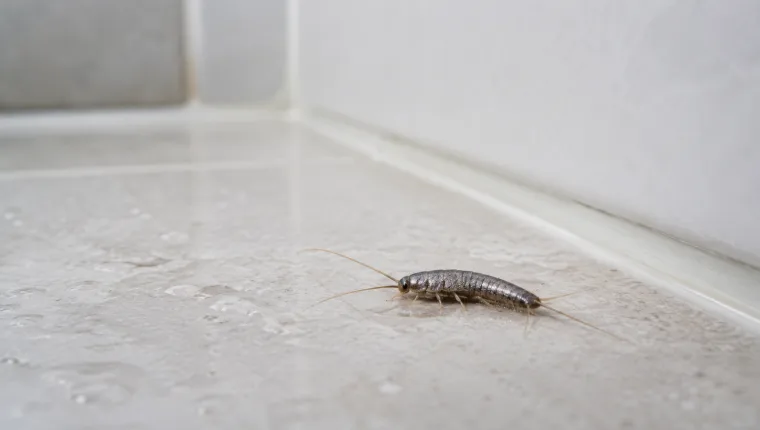
An adult silverfish is usually slender and carrot-shaped, with the widest part near the head and a body that narrows toward the rear. Key identification features include:
- A flattened, wingless body.
- Two long antennae at the front.
- Three long appendages at the rear.
- A silvery, gray, or metallic appearance caused by scales on the body.
- Rapid, darting movement across floors, walls, shelves, or storage surfaces.
- A preference for hiding in cracks and dark spaces during the day.
Size varies with age and species, but adults are commonly around one-half inch long excluding the antennae and rear appendages. A photograph taken beside a millimeter scale is more useful than a distant image without size context.
Silverfish versus firebrats
Firebrats are close relatives and are often confused with silverfish. Both are wingless, tapered insects with long antennae and three rear appendages. The main practical difference is habitat preference.
| Feature | Silverfish | Firebrat |
|---|---|---|
| Typical coloration | Silvery, gray, or metallic | Mottled gray and brown |
| Preferred conditions | Cooler, humid rooms and storage areas | Warmer locations near heat-producing equipment |
| Common locations | Bathrooms, basements, closets, libraries, attics | Boiler rooms, furnace areas, commercial kitchens, hot utility spaces |
| Control priority | Humidity, leaks, storage, cracks | Heat-associated harborages, moisture, food, cracks |
Color alone is not definitive because lighting, age, dust, and specimen condition affect appearance. Location and environmental conditions are valuable supporting clues.
Silverfish versus centipedes and other lookalikes
House centipedes have many long legs extending from the sides of the body and are predators. Silverfish have six legs, no visible side fringe of long legs, and three rear appendages. Carpet beetle larvae are hairy and more rounded. Cockroach nymphs have a broader body and do not have the same three long tail-like appendages. Booklice are much smaller and usually appear as tiny pale insects around damp paper, cardboard, or mold.
Where silverfish hide in a house
Silverfish spend most of their time hidden. They squeeze into narrow gaps and emerge when conditions are quiet, often at night. Common harborages include:
- Under sinks and around plumbing penetrations.
- Behind baseboards, trim, cabinets, and loose wallpaper.
- Inside wall voids and utility chases.
- In basement storage, crawl spaces, and attics.
- Between stacked cardboard boxes.
- On bookshelves and inside document storage.
- Behind appliances and stored furniture.
- In linen closets, laundry rooms, and bathrooms.
- Near roof leaks, condensation, or poorly ventilated spaces.
A sighting in a bathtub does not necessarily mean the insect came from the drain. Silverfish may fall into smooth-sided fixtures and become unable to climb out. Inspect nearby gaps, plumbing penetrations, wall voids, cabinets, and moisture sources before treating a drain.
Bathrooms and laundry rooms
These rooms often provide humidity, condensation, paper products, lint, natural fibers, and small gaps. Check under sinks, behind toilets, around pipe penetrations, near damaged caulk, and behind stored linens.
Basements and crawl spaces
Persistent dampness, stored cardboard, masonry cracks, exposed insulation paper, and limited airflow can support silverfish. Look for plumbing leaks, foundation seepage, condensation, poor drainage, and items stored directly against walls or floors.
Attics and upper floors
Roof leaks, bathroom exhaust problems, humid air movement, stored papers, and cardboard can create suitable conditions. Attic inspection may involve fall, electrical, insulation, or heat hazards, so use a qualified professional when safe access is uncertain.
Kitchens, pantries, and libraries
Silverfish may use flour, cereal residues, paper labels, cardboard packaging, book bindings, and adhesives. Store vulnerable foods in sealed containers and keep shelves clean and dry. In libraries or archives, control should prioritize humidity, careful monitoring, and preservation-safe methods.
Signs of a silverfish infestation
One insect does not reveal the size of a population. Assess the pattern of evidence over time. Useful signs include:
- Repeated sightings in the same room.
- Multiple captures on sticky monitors.
- Irregular scraping or feeding marks on paper, wallpaper, labels, or cardboard.
- Small holes or surface loss on stored materials.
- Yellowish staining or tiny dark droppings near harborages.
- Cast skins in cracks, boxes, shelves, or storage areas.
- Activity in several rooms, suggesting connected harborages.
Damage alone can be difficult to attribute. Carpet beetles, cockroaches, booklice, rodents, moisture, mold, and normal aging can damage stored materials. Combine visual identification, trap captures, room conditions, and damage patterns before choosing a treatment.
What damage silverfish can cause
Silverfish do not chew wood like termites and are not known for structural tunneling. Their main impact is cosmetic or material damage. They scrape or graze the surface of susceptible items and may damage:
- Books, papers, photographs, maps, and documents.
- Wallpaper and wallpaper paste.
- Cardboard cartons and labels.
- Cotton, linen, rayon, and starched fabrics.
- Stored foods containing starch or carbohydrates.
- Insulation facing, adhesives, and paper-backed materials.
Damage tends to develop slowly, but valuable collections can suffer meaningful loss if humidity and activity continue for months or years. Museums, archives, libraries, and document-heavy businesses should use a monitored preservation plan rather than routine broad pesticide application.
Why humidity matters
Moisture is one of the most important silverfish risk factors. High relative humidity can improve survival, support mold and microbial growth, soften paper products, and make hidden spaces more favorable. Reducing humidity does not instantly eliminate every insect, but it removes a major condition that supports the population.
Use a hygrometer to compare rooms and track trends. A single reading is less useful than repeated measurements at different times. Investigate persistent humidity, condensation, musty odors, staining, or damp materials.
Common moisture sources
- Leaking supply lines, drains, roofs, or appliances.
- Condensation on pipes, windows, ducts, or exterior walls.
- Unvented bathrooms or dryers.
- Ground moisture in crawl spaces or basements.
- Blocked gutters or poor exterior drainage.
- Overwatering of indoor plants.
- Stored damp cardboard, textiles, or paper.
Fix the source rather than relying only on a dehumidifier. Dehumidifiers can help, but they require correct sizing, safe electrical use, drainage, and maintenance. Do not run extension cords or equipment in wet areas unless the setup is appropriate and safe.
How to inspect for silverfish
A useful inspection follows the moisture and storage pattern of the home.
- Document sightings. Record the room, date, time, and exact location.
- Measure humidity. Compare affected and unaffected rooms.
- Inspect moisture sources. Look for leaks, condensation, staining, and damp materials.
- Examine stored materials. Check cardboard, paper, books, fabrics, and food packaging.
- Inspect cracks and edges. Focus on baseboards, cabinets, pipe gaps, shelves, and wall-floor junctions.
- Place sticky monitors. Put them along walls and near suspected harborages, away from children and pets.
- Review after seven to fourteen days. Compare trap locations rather than relying on one capture.
Sticky monitors help map activity but are not usually a complete control method. An empty trap does not prove the room is free of silverfish, especially if placement is poor or activity is low.
How to get rid of silverfish with an IPM plan
Integrated pest management combines environmental correction, monitoring, exclusion, sanitation, storage changes, and targeted treatment when necessary. The goal is to make the building less suitable, not simply kill visible insects.
1. Correct leaks and humidity
Repair plumbing, roof, drainage, and ventilation problems. Dry damp materials. Improve airflow where appropriate. Use dehumidification as part of a broader moisture plan.
2. Reduce food and shelter
Discard unnecessary cardboard and paper clutter. Vacuum cracks, shelf edges, and storage areas using equipment appropriate for the material. Store documents, textiles, and dry foods in clean, sealed containers. Avoid placing cardboard directly on damp concrete or against basement walls.
3. Seal accessible gaps
Seal cracks around baseboards, cabinets, trim, utility penetrations, and wall-floor junctions after moisture issues are addressed. Do not seal over an active leak or conceal structural damage. Use materials suitable for the surface and building condition.
4. Monitor activity
Keep traps in the same labeled locations and record captures. Pair trap data with humidity measurements and corrective actions. A declining trend across several weeks is more meaningful than one quiet night.
5. Use pesticide products only when justified
Some registered products are labeled for silverfish in cracks, crevices, voids, or other specific sites. Product form, active ingredient, placement, and restrictions vary. The label is the controlling instruction. Do not apply dusts or sprays broadly to floors, shelves, bedding, food areas, electrical equipment, air ducts, or document collections unless the label explicitly permits the site and use.
Keep products away from children, pets, food, dishes, and personal items. People with asthma or chemical sensitivities may need additional precautions. Never mix pesticides, household cleaners, boric acid, diatomaceous earth, essential oils, or other powders into improvised treatments.
Do home remedies work for silverfish?
Many online remedies focus on scents, essential oils, spices, homemade traps, bleach, or broad powder application. These approaches often fail because they do not correct hidden moisture or reach harborages. Some can damage surfaces, contaminate food areas, expose pets, irritate airways, or violate pesticide directions.
A jar-style trap may capture a few insects, but captures do not prove the population has been eliminated. Cedar or scented products may affect local behavior without controlling insects inside walls, boxes, or concealed gaps. Use monitoring data and environmental correction rather than relying on odor-based claims.
How long silverfish control takes
Control time depends on population size, building moisture, access to harborages, storage conditions, and whether connected rooms or units are involved. Visible activity may decline after moisture and storage corrections, but hidden insects and eggs can remain. Continue monitoring for several weeks and review whether humidity and trap counts are improving.
Persistent captures do not automatically mean a product failed. They may indicate an uncorrected leak, untreated connected space, hidden food source, poor trap placement, or reinvasion from a wall void, attic, crawl space, or neighboring unit.
How to prevent silverfish from returning
- Inspect plumbing, roofing, and drainage problems promptly.
- Vent bathrooms and laundry areas appropriately.
- Track humidity in basements, closets, archives, and storage rooms.
- Replace damaged cardboard with sealed plastic or archival storage where suitable.
- Keep stored items off damp floors and away from exterior walls.
- Vacuum shelf edges, cracks, and undisturbed storage areas.
- Seal gaps after moisture and building problems are corrected.
- Inspect secondhand books, papers, boxes, and furniture before storage.
- Maintain sticky monitors in rooms with valuable materials or past activity.
When to call a professional
Professional help is appropriate when:
- Silverfish are appearing in multiple rooms or units.
- Trap counts remain high despite moisture and storage corrections.
- Activity involves wall voids, attics, crawl spaces, or inaccessible areas.
- Leaks, mold, damaged materials, or building defects require specialist repair.
- Valuable books, archives, artwork, photographs, or textiles are at risk.
- A pesticide treatment is being considered in food, child-care, health-care, electrical, or sensitive environments.
- The identification remains uncertain.
A qualified provider should inspect moisture and harborage conditions, confirm the pest, explain treatment limitations, identify label-approved sites, and provide a monitoring plan. Avoid providers that promise permanent elimination from a single spray without addressing humidity, leaks, storage, and cracks.
Silverfish humidity and sighting log
Download the Silverfish Humidity and Sighting Log to record room conditions, sightings, trap captures, moisture sources, materials at risk, corrective actions, and follow-up results.
Frequently asked questions
Do silverfish bite people?
Silverfish are not known for biting people. They are primarily nuisance insects and material pests. Skin irritation should not be diagnosed from the presence of silverfish; seek medical guidance for unexplained symptoms.
Why do I find silverfish in the bathtub?
They may enter from nearby cracks, wall voids, cabinets, or plumbing gaps and become trapped by the smooth sides. Inspect the surrounding room rather than assuming they live in the drain.
Are silverfish a sign of water damage?
Not always, but repeated activity can signal elevated humidity, condensation, leaks, or damp storage. Investigate moisture conditions even when obvious water damage is absent.
Can silverfish damage books and clothing?
Yes. They can scrape paper, bindings, wallpaper paste, labels, starched fabrics, and some natural fibers. Damage is often gradual but can become important in long-term storage.
Will a dehumidifier get rid of silverfish?
Lower humidity can make conditions less favorable, but a dehumidifier alone may not eliminate insects hidden in walls, boxes, or connected rooms. Correct leaks, improve storage, seal gaps, and monitor activity as well.
What is the difference between a silverfish and a firebrat?
Both have a tapered wingless body, long antennae, and three rear appendages. Silverfish are generally silvery and associated with cooler humid areas, while firebrats are more mottled and favor warmer locations.
Do silverfish come from drains?
They may travel around plumbing and wall gaps, but a sink or tub sighting does not prove they originated inside the drain. Check pipe penetrations, cabinets, moisture, and nearby cracks.
Are sticky traps enough to control silverfish?
Sticky traps help detect and map activity, but they rarely correct the moisture, food, and harborage conditions supporting a population. Use them as part of an integrated plan.
Should I spray every room after seeing one silverfish?
No. First confirm the pest, inspect moisture and storage conditions, and monitor activity. Broad indoor spraying may be unnecessary and can increase exposure without reaching hidden harborages.
