
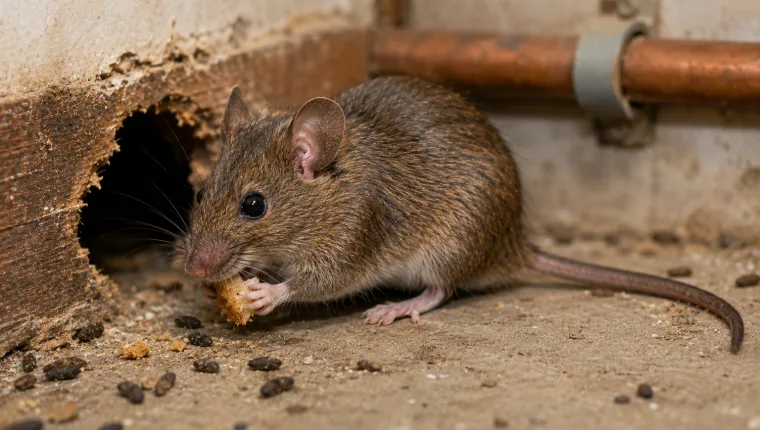
Last reviewed: July 2026
Effective rodent control combines identification, inspection, exclusion, trapping, sanitation, safe cleanup, and continued monitoring. Killing or removing the rodents currently inside a building is only one part of the process. If entry points, food, water, nesting materials, and exterior conditions remain unchanged, mice or rats can return.
The first decision is whether the property has mice, rats, another small mammal, or only old evidence. House mice, Norway rats, and roof rats differ in size, behavior, nesting locations, travel routes, and trap response.
A practical control sequence is:
- Confirm the rodent and locate active areas.
- Identify interior and exterior entry points.
- Seal appropriate openings without trapping animals in inaccessible spaces.
- Remove indoor rodents with correctly placed traps or a professional control program.
- Clean droppings, urine, nests, and dead rodents using CDC-aligned precautions.
- Remove food, water, clutter, and nesting opportunities.
- Continue monitoring for new droppings, gnawing, sounds, tracks, or trap activity.
Call a professional when rodents are inside walls, ceilings, attics,
crawl spaces, inaccessible voids, commercial food areas, apartment buildings, or contaminated insulation. Professional help is also appropriate when trapping fails, the species is uncertain, extensive exclusion is required, or children and pets complicate safe control.
For pricing, compare our mouse exterminator cost guide and rat control cost guide.
- What Is Rodent Control?
- Common Rodents Found Around Homes
- How to Tell Mice and Rats Apart
- Signs of a Rodent Infestation
- How to Determine Whether Rodent Activity Is Current
- Where Rodents Enter a House
- Rodent Control Step by Step
- How to Use Snap Traps
- Live Traps and Rodent Release
- Glue Traps
- Electronic Rodent Traps
- Rodenticides and Poison Baits
- How to Clean Rodent Droppings Safely
- Rodent Control in Attics
- Rodents Inside Walls
- Rodent Control in Apartments
- Why Rodent Control Fails
- How Long Does Rodent Control Take?
- How to Prevent Mice and Rats
- DIY Rodent Control vs. Professional Service
- How to Compare Rodent Control Companies
- Rodent Entry-Point Inspection Checklist
- Frequently Asked Questions
- What is the most effective rodent control method?
- How do I know whether I have mice or rats?
- Does one mouse mean an infestation?
- Does one rat mean more are nearby?
- What attracts rodents to a house?
- What smells keep mice and rats away?
- Do ultrasonic rodent repellents work?
- Where should mouse traps be placed?
- Why are rats avoiding traps?
- Should I use poison for mice inside the house?
- Can mice and rats climb?
- Can rats enter through a toilet?
- Should rodent holes be sealed immediately?
- Can expanding foam stop rodents?
- Can I vacuum mouse droppings?
- How long does it take to get rid of mice?
- How long does it take to get rid of rats?
- Can rodents damage electrical wiring?
- Does homeowners insurance cover rodent damage?
- When should I call a rodent-control professional?
- How much does professional rodent control cost?
What Is Rodent Control?
Rodent control is the process of finding, removing, and preventing pest rodents around a building or property. A complete program addresses both the animals and the conditions allowing them to survive.
Rodent control may include:
- Species identification
- Interior and exterior inspection
- Monitoring
- Trap placement
- Rodenticide use when appropriate
- Entry-point sealing
- Door, vent, roof, and utility repairs
- Food and waste management
- Moisture correction
- Removal of nesting materials
- Cleanup and disinfection
- Contaminated-insulation evaluation
- Follow-up inspections
The U.S. Environmental Protection Agency describes Integrated Pest Management as a process combining pest identification, monitoring, prevention, action thresholds, targeted control, and evaluation.
For rodents, this means traps or rodenticides should not replace exclusion, sanitation, inspection, and monitoring.
Common Rodents Found Around Homes
The three rodents most commonly associated with U.S. buildings are the house mouse, Norway rat, and roof rat.
| Rodent | Typical appearance | Common locations | Behavior relevant to control |
|---|---|---|---|
| House mouse | Small body, pointed nose, large ears relative to the head, and a thin tail | Kitchens, wall voids, cabinets, garages, attics, appliances, storage rooms, and furniture | Can use very small entry gaps, explores nearby objects, and may establish several small nesting areas |
| Norway rat | Large, heavy body, blunt nose, relatively small ears, and a tail commonly shorter than the head and body combined | Burrows, basements, crawl spaces, sewers, lower floors, garbage areas, and ground-level voids | Often travels along walls and established routes and may be cautious around newly placed objects |
| Roof rat | Slender body, pointed nose, relatively large ears, and a long tail | Attics, ceilings, trees, rooflines, upper storage areas, vines, and elevated utility routes | Strong climber that commonly uses overhead pathways |
House Mice
House mice are small, adaptable rodents that can live close to people and survive on limited food and water.
Common nesting locations include:
- Wall voids
- Kitchen cabinets
- Appliances
- Stored boxes
- Furniture
- Garage storage
- Attic insulation
- Utility closets
Because mice can remain within a relatively small area when food and shelter are available, several traps may be needed around one room or appliance.
See our mouse infestation signs guide and guide to getting rid of mice.
Norway Rats
Norway rats are robust rodents commonly associated with ground-level environments, burrows, sewers, garbage, basements, and crawl spaces.
They may enter through:
- Foundation openings
- Damaged doors
- Floor drains
- Sewer connections
- Crawl-space vents
- Utility penetrations
- Gaps beneath additions or porches
Norway rats may be cautious around unfamiliar traps and objects. Inspection should identify their regular runways, feeding locations, burrows, and access points before devices are placed.
Roof Rats
Roof rats are agile climbers often found in warmer regions. They may travel along:
- Tree branches
- Fences
- Utility lines
- Vines
- Roof edges
- Attic rafters
- Ceiling voids
Ground-level traps alone may miss roof rats using elevated routes.
See our rat infestation signs guide and guide to getting rid of rats.
How to Tell Mice and Rats Apart
Rodent identification should use several forms of evidence rather than droppings alone.
| Evidence | More consistent with mice | More consistent with rats |
|---|---|---|
| Body size | Small and lightweight | Substantially larger and heavier |
| Droppings | Small and commonly pointed at one or both ends | Larger and generally thicker |
| Gnawing | Fine tooth marks on food packages, cabinets, and small openings | Larger damage to wood, plastic, doors, containers, and structural materials |
| Travel area | May remain close to food and nesting areas | May travel farther between food, water, shelter, and burrows |
| Nesting | Shredded paper, fabric, insulation, and soft material inside protected voids | Burrows, heavy nesting material, crawl spaces, attics, walls, or exterior harborages |
| Tracks | Small footprints and tail marks | Larger footprints and more obvious travel routes |
| Sounds | Light scratching or movement | Heavier scratching, movement, gnawing, or thumping |
Dropping size and shape can vary by rodent age, diet, and condition. Old or broken droppings can also be misleading. Use location, tracks, gnawing, photographs, specimens, trap captures, and professional inspection to support identification.
Signs of a Rodent Infestation
Droppings
Rodent droppings are commonly found:
- Inside cabinets
- Behind appliances
- Along walls
- Near stored food
- Inside drawers
- In attics
- In garages
- Near nesting materials
- Along established runways
Fresh droppings may look darker or shinier than older material, but appearance alone cannot determine the exact age or whether the infestation remains active.
Do not sweep or vacuum dry droppings. Follow the safe cleanup process described later in this guide.
Gnaw Marks
Mice and rats gnaw because their front teeth continue growing.
Damage may occur on:
- Food packages
- Plastic containers
- Wood
- Doors
- Cabinets
- Drywall
- Electrical wiring
- Insulation
- Flexible plumbing or appliance lines
Damaged wiring, gas lines, plumbing, or structural components should be inspected by an appropriately qualified professional.
Scratching and Movement Sounds
Rodents may be heard inside:
- Walls
- Ceilings
- Attics
- Floor voids
- Cabinets
- Behind appliances
Activity is often more noticeable at night when the building is quiet. Sounds alone do not prove that the animal is a mouse or rat. Squirrels, birds, bats, raccoons, insects, pipes, and building movement can create similar noises.
See our rats in walls guide and rats in the attic guide.
Rub Marks
Repeated contact with walls, pipes, beams, and openings may leave dark, greasy marks along established rodent routes.
Rub marks should be evaluated with droppings, tracks, gnawing, burrows, or trap activity.
Tracks and Tail Marks
Footprints and tail marks may appear in dust, grease, soil, flour, or other fine material.
Do not spread food flour or another material in contaminated areas without considering cleanup and food-safety concerns. Professional tracking products or monitoring devices may be safer and easier to document.
Nests
Mice may build nests from:
- Paper
- Fabric
- Insulation
- Cardboard
- Plant material
- Other shredded material
Rats may use larger amounts of similar material or occupy burrows, wall voids, attic insulation, crawl spaces, and exterior harborages.
Burrows
Norway rat burrows may occur near:
- Foundations
- Garbage areas
- Retaining walls
- Landscaping
- Concrete slabs
- Decks
- Sheds
- Animal-feeding areas
An opening in soil is not automatically an active rat burrow. Other wildlife, erosion, drainage, and structural gaps can create similar openings.
Unusual Pet Behavior
Dogs and cats may stare, scratch, or remain focused on walls, cabinets, appliances, or ceilings. This can help identify an area for inspection but does not confirm the responsible pest.
How to Determine Whether Rodent Activity Is Current
Old droppings, gnawing, nests, and rub marks may remain after rodents have left or been removed.
To evaluate current activity:
- Photograph and document existing evidence.
- Clean selected areas safely.
- Place traps or monitoring devices along likely travel routes.
- Inspect food packages and stored materials.
- Listen for new sounds.
- Check for new droppings, gnawing, nesting, or tracks.
- Inspect repaired entry points.
- Record activity by date and location.
Continuing evidence after cleanup suggests that rodents remain active or are entering again.
Where Rodents Enter a House
The Centers for Disease Control and Prevention recommends inspecting inside and outside a building and sealing openings that allow wild rodents to enter.
Common entry areas include:
- Gaps beneath exterior doors
- Garage-door corners
- Foundation cracks
- Utility and plumbing penetrations
- Damaged crawl-space vents
- Roof vents
- Soffit and fascia gaps
- Openings around air-conditioning lines
- Damaged window screens
- Gaps around siding
- Floor drains and sewer routes
- Roof intersections
- Spaces beneath porches and additions
Mouse Entry Points
House mice can use very small openings. Inspect:
- Pipe penetrations beneath sinks
- Cabinet and wall gaps
- Utility-line openings
- Door sweeps
- Garage-wall connections
- Foundation vents
- Openings behind appliances
Rat Entry Points
Rats may enter through larger structural gaps, damaged doors, sewers, drains, crawl spaces, roof openings, and utility routes.
Roof rats require an elevated inspection that includes:
- Branches touching the roof
- Vines
- Overhead wires
- Roof vents
- Damaged soffits
- Attic openings
Rodent Control Step by Step
Step 1: Confirm the Rodent
Use droppings, tracks, gnawing, sounds, nesting, body size, trap captures, and location to distinguish mice from rats.
Identification matters because:
- Mouse and rat traps differ in size.
- Trap placement may differ.
- Roof rats use elevated routes.
- Norway rats may burrow.
- Rats may be more cautious around new devices.
- Another wildlife species may require different licensing or removal methods.
Step 2: Map the Activity
Record:
- Dropping locations
- Gnawing
- Sounds
- Food damage
- Nests
- Burrows
- Rub marks
- Trap captures
- Possible entry points
This evidence helps determine where traps, monitors, and exclusion work should be concentrated.
Step 3: Remove Food and Water
- Store food in rodent-resistant containers.
- Clean crumbs and spills.
- Secure pet and bird food.
- Clean beneath appliances.
- Repair plumbing leaks.
- Remove standing water.
- Use tightly closing garbage containers.
- Clean outdoor grills and feeding areas.
- Remove fallen fruit and spilled seed.
Removing food does not force every rodent to leave immediately, but it improves trapping and reduces the property’s ability to support continuing activity.
Step 4: Reduce Clutter and Nesting Material
- Reduce cardboard storage.
- Organize garages and basements.
- Store materials above the floor when practical.
- Remove unused fabric and paper.
- Trim dense vegetation near the building.
- Move firewood away from the structure.
Step 5: Seal Entry Points
Exclusion materials may include:
- Metal mesh
- Hardware cloth
- Metal flashing
- Mortar
- Appropriate sealants
- Door sweeps
- Vent covers
- Roof and siding repairs
Soft expanding foam, plastic, rubber, or wood used alone may be vulnerable to gnawing.
Before sealing:
- Determine whether rodents are still inside.
- Consider whether the opening is an active one-way route.
- Avoid trapping animals inside walls, attics, or crawl spaces.
- Coordinate sealing with trapping when necessary.
- Do not block required ventilation or drainage.
- Do not create electrical, fire, or moisture hazards.
Step 6: Trap Active Rodents
The CDC recommends traditional snap traps for controlling wild mice and rats around the home.
Use traps sized for the identified rodent. A mouse trap may not control a rat, while an oversized rat trap may not respond properly to a mouse.
Step 7: Clean Contaminated Areas Safely
Do not sweep or vacuum dry rodent urine, droppings, or nesting material. Wet and disinfect the material before removal, following the CDC process described below.
Step 8: Continue Monitoring
Continue inspecting until:
- No traps capture rodents
- No new droppings appear
- No new gnawing occurs
- No sounds continue
- Food remains undamaged
- Sealed openings remain intact
- Exterior burrows or travel routes show no continuing activity
How to Use Snap Traps
Snap traps can provide rapid confirmation and removal when correctly selected and placed.
Choose the Correct Trap
Use mouse-sized traps for mice and rat-sized traps for rats. Follow the trap manufacturer’s instructions.
Place Traps Along Travel Routes
Rodents commonly travel beside walls, cabinets, pipes, beams, and other edges.
Potential trap locations include:
- Behind appliances
- Inside cabinets
- Along wall edges
- Near droppings
- Beside gnawing damage
- Near attic runways
- Near burrow entrances
- Along roof-rat travel routes
Do not place traps where children, pets, or non-target wildlife can reach them. Protective trap boxes may be necessary.
Use Enough Traps
Using one trap in a property with several activity areas may provide poor results. Place multiple traps in confirmed and adjacent areas, following safe placement practices.
Check Traps Frequently
Check traps according to the manufacturer’s instructions and at least often enough to remove captured rodents promptly.
Record:
- Trap number
- Location
- Date placed
- Capture date
- Rodent type
- Bait disturbance
- Trap movement
Why Rats May Avoid New Traps
Rats may be cautious around unfamiliar objects. A professional may leave traps unset initially or adjust placement based on rat behavior and site conditions.
Avoid repeatedly moving every trap before the rodents have had an opportunity to encounter them.
Live Traps and Rodent Release
Live-capture traps may appear humane, but they have important limitations.
- Released rodents may return if entry points remain open.
- Relocation may be restricted by local rules.
- The animal may not survive after relocation.
- Handling the trap can expose people to urine, droppings, bites, or scratches.
- Traps must be checked frequently.
- Release can move a pest problem to another property.
Review applicable wildlife and animal-control requirements before using or relocating a live-captured rodent.
Glue Traps
Glue traps may capture rodents but can create animal-welfare, monitoring, and non-target risks.
They may also expose a person to a live rodent during removal. Dust, moisture, cold, debris, and poor placement can reduce effectiveness.
Some jurisdictions or facilities restrict their use. Snap traps or professional alternatives are often easier to monitor and manage.
Electronic Rodent Traps
Electronic traps are enclosed devices designed to kill a rodent after it enters the chamber.
Potential advantages include:
- Enclosed capture area
- Easy status indicator on some models
- Reduced visual contact with the rodent
- Reusable design
Limitations include:
- Higher purchase cost
- Battery or electrical requirements
- Need for correct placement
- Size limitations
- Potential access by children or pets if not properly secured
Rodenticides and Poison Baits
Rodenticides are pesticides designed to kill rodents. They can pose serious risks to children, pets, wildlife, and non-target animals when used incorrectly.
The EPA requires consumer rodenticide products to meet packaging and bait-station requirements intended to reduce exposure risks.
Rodenticides should never be placed loosely where people, pets, livestock, or wildlife may reach them.
Important Rodenticide Questions
- Is the product labeled for the exact location?
- Is a tamper-resistant bait station required?
- Which rodent is listed on the label?
- Where can the station legally and safely be placed?
- How often must it be inspected?
- How will dead rodents be located and removed?
- Could pets or wildlife eat poisoned rodents?
- Who is responsible for documenting bait consumption?
Limitations of Indoor Poison Use
A poisoned rodent may die inside:
- A wall
- A ceiling
- An attic void
- A crawl space
- An appliance
- Another inaccessible area
This can create odor, insect activity, and removal difficulties.
Poison also does not seal entry points. New rodents can continue entering after the original animals die.
Secondary Poisoning
Predators and scavengers may be exposed when they consume poisoned rodents. Follow the product label and applicable professional or regulatory guidance.
When children, pets, livestock, or wildlife are present, discuss nonchemical options and risk controls with a qualified professional.
How to Clean Rodent Droppings Safely
Rodent urine, droppings, nesting material, and carcasses may contain germs. Avoid actions that send contaminated dust into the air.
The CDC advises against sweeping or vacuuming dry rodent urine, droppings, or nesting material.
General Cleanup Process
- Ventilate the area when appropriate and safe.
- Wear rubber or plastic gloves.
- Wet droppings, urine, and contaminated material with an appropriate disinfectant.
- Allow the required contact time stated by the product instructions.
- Wipe up the material with paper towels or disposable cloths.
- Place waste in a sealed bag.
- Clean and disinfect the surrounding surface.
- Remove gloves safely and wash hands thoroughly.
Do not mix cleaning chemicals unless the manufacturer specifically permits it. Mixing bleach with ammonia or other products can create dangerous gases.
Dead Rodent Cleanup
Wear gloves, disinfect the rodent and surrounding area, place the carcass and cleanup material in a sealed bag, and follow CDC and local waste-disposal guidance.
Heavy Infestations
Heavy contamination in attics, crawl spaces, sheds, vehicles, ventilation systems, or occupied rooms may require additional personal protective equipment and professional remediation.
Contact a qualified professional when:
- Droppings cover a large area
- Contaminated insulation must be removed
- The area cannot be ventilated safely
- Rodents occupied ducts or air-handling equipment
- Dead rodents are inaccessible
- Workers require respiratory protection
- The property is a school, healthcare, food, or multifamily facility
Rodent Control in Attics
Attic infestations may involve mice, roof rats, squirrels, bats, birds, or other wildlife. Identification should occur before exclusion.
An attic inspection may include:
- Droppings
- Tracks
- Gnawed wiring
- Damaged insulation
- Nesting materials
- Roof and soffit openings
- Vent screens
- Branches touching the structure
- Travel marks on beams and pipes
Attic work can involve fall, electrical, heat, insulation, and respiratory hazards. Avoid entering an unsafe or inaccessible attic.
Rodents Inside Walls
Scratching inside a wall does not automatically mean the wall must be opened.
A technician may:
- Inspect adjacent rooms
- Check attic and crawl-space routes
- Place traps near access points
- Use cameras or monitoring devices
- Inspect exterior penetrations
- Determine whether rodents leave the void to feed
Opening walls may be necessary when there is a dead rodent, nest, damaged wiring, plumbing damage, or contamination that cannot otherwise be accessed.
Rodent Control in Apartments
Rodents can move between apartment units through:
- Plumbing chases
- Utility openings
- Shared walls
- Hallways
- Trash rooms
- Basements
- Roof spaces
- Common storage areas
Treating one apartment without correcting shared entry routes may provide temporary results.
A coordinated multifamily program should address:
- Reported units
- Units above, below, and beside the activity
- Common areas
- Garbage management
- Building penetrations
- Exterior burrows
- Food and storage practices
- Maintenance work orders
- Follow-up inspections
Residents should report activity promptly in writing and preserve photographs, specimens, damaged packages, and dates.
Why Rodent Control Fails
- The rodent was incorrectly identified.
- Too few traps were used.
- Traps were placed away from travel routes.
- The wrong trap size was selected.
- Entry points remained open.
- Food and pet food remained accessible.
- Roof, sewer, or crawl-space routes were overlooked.
- Rats avoided unfamiliar devices.
- Rodenticide killed some animals but did not prevent reinfestation.
- Apartment units or common areas remained untreated.
- Dead rodents or nests remained in inaccessible voids.
- Monitoring stopped before activity ended.
Repeated failure should trigger a new inspection rather than automatic repetition of the same treatment.
How Long Does Rodent Control Take?
The timeline varies by rodent, infestation size, building complexity, trap response, access, sanitation, and exclusion work.
| Situation | Possible control timeline | Main variable |
|---|---|---|
| One mouse in an accessible room | Potentially resolved within several days | Whether additional mice or entry points exist |
| Established mouse infestation | Several days to multiple weeks | Number of nesting areas, traps, food sources, and openings |
| Rat infestation | Several weeks or longer | Rat caution, burrows, travel routes, trap placement, and exterior pressure |
| Attic or wall infestation | Several weeks or longer | Access, exclusion, contamination, and concealed travel routes |
| Multifamily infestation | Ongoing coordinated program | Building conditions, access to units, sanitation, and shared entry routes |
A company should not guarantee elimination within a fixed number of days without inspecting the property and defining what elimination means.
How to Prevent Mice and Rats
Seal the Building
- Install and maintain door sweeps.
- Repair garage-door seals.
- Seal utility penetrations.
- Repair foundation cracks.
- Screen vents.
- Repair soffits and roof edges.
- Inspect after plumbing, electrical, or HVAC work.
Manage Food
- Use tightly sealed containers.
- Clean food residue promptly.
- Store pet food securely.
- Remove outdoor feeding leftovers.
- Protect bird seed and animal feed.
- Clean grills and outdoor kitchens.
Manage Garbage
- Use containers with secure lids.
- Clean spills around dumpsters and bins.
- Avoid overflowing containers.
- Repair damaged garbage enclosures.
- Schedule sufficient waste collection.
Reduce Exterior Shelter
- Trim dense vegetation.
- Move wood piles away from the building.
- Remove unused debris.
- Maintain sheds and outbuildings.
- Remove fallen fruit.
- Repair drainage problems.
- Inspect beneath decks and porches.
Monitor High-Risk Areas
Inspect kitchens, garages, attics, basements, crawl spaces, utility rooms, loading areas, and exterior walls for new evidence.
DIY Rodent Control vs. Professional Service
DIY Control May Be Reasonable When:
- Evidence is limited to one accessible area
- The rodent has been identified
- Entry points are visible
- Traps can be placed safely
- Contamination is limited
- Children and pets can be protected
- Activity declines during monitoring
Professional Rodent Control Is More Appropriate When:
- Rats are present
- Activity occurs in several rooms
- Rodents are inside walls or ceilings
- The attic or crawl space is unsafe
- Extensive droppings or contaminated insulation are present
- Wiring or plumbing is damaged
- Trapping has failed
- Entry points are on the roof or beneath the structure
- The property is multifamily or commercial
- Children, pets, livestock, or wildlife increase bait risks
- The animal may be protected wildlife rather than a pest rodent
How to Compare Rodent Control Companies
Ask each company:
- Did you identify mice, Norway rats, roof rats, or another animal?
- What evidence supports the identification?
- Which interior and exterior areas will be inspected?
- Which entry points were found?
- Will exclusion be completed before, during, or after trapping?
- How will you avoid trapping rodents inside the structure?
- Which traps or rodenticides will be used?
- How often will devices be checked?
- Are dead-rodent removal and odor response included?
- Is contaminated-material cleanup included?
- Which repairs are included?
- How many follow-up visits are included?
- What evidence will determine that control is complete?
- What does the warranty cover?
- How can I verify the company’s license and insurance?
Rodent Entry-Point Inspection Checklist
| Inspection area | Condition found | Repair needed | Completion date |
|---|---|---|---|
| Exterior doors and thresholds | |||
| Garage door | |||
| Foundation | |||
| Plumbing penetrations | |||
| Electrical and cable penetrations | |||
| Crawl-space vents | |||
| Roof vents and soffits | |||
| Attic openings | |||
| Drains and sewer routes | |||
| Porches, decks, and additions | |||
| Exterior burrows | |||
| Tree and vine access |
Frequently Asked Questions
What is the most effective rodent control method?
The most effective approach combines identification, exclusion, trapping, sanitation, safe cleanup, and monitoring. Removing rodents without sealing entry points commonly leads to reinfestation.
How do I know whether I have mice or rats?
Compare body size, droppings, gnawing, tracks, nesting locations, sounds, and trap captures. A professional can confirm the rodent when evidence is unclear.
Does one mouse mean an infestation?
One sighting confirms that a mouse entered the area but does not reveal how many are present. Inspect for droppings, nesting, food damage, entry points, and trap activity.
Does one rat mean more are nearby?
One rat does not provide an exact population count. However, rats often occupy areas with food, water, shelter, burrows, or established travel routes that should be inspected.
What attracts rodents to a house?
Rodents are attracted by accessible food, pet food, garbage, water, shelter, warmth, clutter, nesting material, and openings into the building.
What smells keep mice and rats away?
Odor repellents generally do not provide reliable structural control. Rodents may tolerate or avoid smells temporarily while continuing to use food, shelter, and entry routes elsewhere.
Do ultrasonic rodent repellents work?
Performance claims vary, and rodents may adapt to sound. Ultrasonic devices should not replace inspection, trapping, exclusion, sanitation, and monitoring.
Where should mouse traps be placed?
Place appropriately sized traps along walls and near confirmed travel routes, droppings, gnawing, appliances, cabinets, and nesting areas while keeping them inaccessible to children and pets.
Why are rats avoiding traps?
Rats may be cautious around new objects. Poor placement, insufficient traps, competing food, human disturbance, incorrect trap size, or an inaccurate activity map may also reduce captures.
Should I use poison for mice inside the house?
Indoor poison can create child, pet, wildlife, carcass, and odor risks. Traps may provide better confirmation and carcass recovery in many indoor situations. Review the product label or consult a professional.
Can mice and rats climb?
Yes. Mice and roof rats are strong climbers, and Norway rats can also climb when surfaces and routes permit.
Can rats enter through a toilet?
Rats can use damaged or accessible sewer routes in some situations. Repeated activity around toilets or drains should be evaluated by pest-control and plumbing professionals.
Should rodent holes be sealed immediately?
Entry points should be sealed as part of control, but sealing active routes without a trapping plan can leave rodents inside inaccessible areas. Coordinate exclusion with removal.
Can expanding foam stop rodents?
Soft foam used alone may be gnawed. Durable metal, masonry, flashing, hardware cloth, or other appropriate construction materials are generally needed for lasting exclusion.
Can I vacuum mouse droppings?
Do not vacuum or sweep dry rodent droppings. Wet and disinfect them before removal according to CDC cleanup guidance.
How long does it take to get rid of mice?
A limited mouse problem may be resolved within days, while an established infestation can take several weeks. Entry points, nesting areas, food sources, and trap placement affect the timeline.
How long does it take to get rid of rats?
Rat control commonly takes several weeks or longer because rats may be cautious, use extensive travel routes, occupy burrows, and require exterior exclusion and monitoring.
Can rodents damage electrical wiring?
Yes. Gnawing can damage wiring and increase electrical or fire risk. Suspected wiring damage should be evaluated by a qualified electrician.
Does homeowners insurance cover rodent damage?
Routine rodent infestation, extermination, and maintenance are commonly excluded, but policies vary. Review the specific policy and circumstances with the insurer.
When should I call a rodent-control professional?
Call a professional for rats, inaccessible walls or attics, extensive contamination, repeated trapping failure, structural exclusion, multifamily properties, commercial sites, or uncertain animal identification.
How much does professional rodent control cost?
Pricing depends on whether the property has mice or rats, infestation size, trapping visits, exclusion work, cleanup, location, and warranty. Compare our mouse control pricing guide and rat control pricing guide.
Rodent urine, droppings, nesting material, and carcasses may contain germs. Do not sweep or vacuum contaminated material while it is dry. Follow CDC cleanup guidance, pesticide labels, local wildlife rules, and applicable licensing requirements.


