
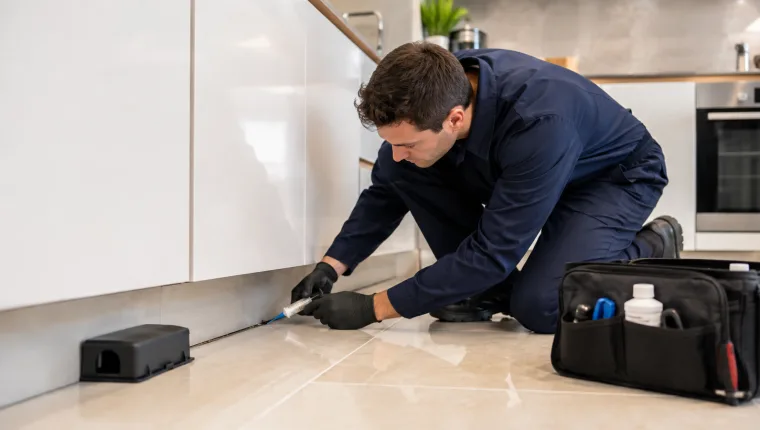
The most effective cockroach treatment is usually an integrated plan built around identification, monitoring, sanitation, exclusion, targeted baiting, and follow-up. A single spray may kill the insects you can see, but it rarely reaches every hiding place, egg case, or neighboring unit. The right treatment depends on the cockroach species, where it is breeding, how extensive the activity is, and whether the problem is limited to one room or connected to drains, wall voids, utility areas, or adjacent apartments.
For most established indoor infestations, baits are the primary pesticide tool. Dusts can be useful in dry, inaccessible voids. Insect growth regulators, often called IGRs, can disrupt development and reproduction as part of a broader program. Sprays have narrower roles and can interfere with baiting when they are used indiscriminately.
Professional treatment becomes more important when activity is widespread, recurring, difficult to access, or affecting multiple units.
This guide explains how each method fits into a safe, evidence-based cockroach control plan, what results may look like over time, and why some treatments fail even when a product appears to work at first.
- How cockroach treatment works
- Confirm the species and infestation level first
- Cockroach baits: the primary treatment for many indoor infestations
- Dusts: useful in dry, inaccessible voids
- Insect growth regulators: a supporting tool
- Sprays: limited roles and common problems
- Foggers and "bug bombs" are not a treatment shortcut
- A step-by-step integrated cockroach treatment sequence
- How long cockroach treatment takes
- Cockroach treatment in apartments and attached housing
- What a professional cockroach treatment plan may include
- Common reasons cockroach treatment fails
- When to stop DIY treatment and call a professional
- Frequently asked questions
- What is the best treatment for cockroaches?
- Are cockroach baits better than sprays?
- How long does gel bait take to work?
- Do insect growth regulators kill cockroaches immediately?
- Can I spray and bait at the same time?
- Why am I still seeing cockroaches after treatment?
- Do bug bombs get rid of cockroaches?
- How often should cockroach monitors be checked?
- Should every apartment in a building be treated?
- What should I ask a cockroach exterminator?
How cockroach treatment works
Cockroach control succeeds when it reduces the population and removes the conditions that allow the infestation to recover. That usually requires several actions working together:
- Identify the species. German cockroaches usually breed indoors near kitchens and bathrooms.
American, Oriental, and Turkestan cockroaches are more often linked to drains, basements, utility spaces, landscaping, or exterior entry.
- Find the active harborages. Sticky monitors, droppings, cast skins, egg cases, and nighttime sightings help reveal where cockroaches are feeding and hiding.
- Reduce competing food and water. Baits work better when crumbs, grease, pet food, standing water, and leaking plumbing are addressed.
- Place control products where cockroaches travel. Targeted placement near harborages is more useful than distributing pesticide across entire rooms.
- Recheck and adjust. Trap counts, fresh droppings, and new sightings show whether the plan is working or needs to change.
The UC Statewide IPM Program emphasizes that sanitation and exclusion are essential because pesticides alone do not solve a cockroach problem. Its guidance also notes that baits generally provide better long-term control than sprays when they are placed near active hiding areas.
Confirm the species and infestation level first
Before choosing a treatment, determine whether the cockroaches are breeding indoors or entering from outside. Treating the wrong source wastes time and can leave the real problem untouched.
German cockroaches
German cockroaches are small, tan to light brown, and usually have two dark parallel stripes behind the head. They reproduce rapidly and commonly cluster around refrigerators, stoves, sinks, dishwashers, cabinet hinges, and plumbing penetrations. Repeated sightings of nymphs usually mean reproduction is happening nearby.
American and other large cockroaches
Large reddish-brown or dark cockroaches may be associated with sewers, drains, basements, crawl spaces, utility rooms, mulch, or exterior gaps. Their control often requires moisture correction and exclusion in addition to indoor monitoring. If only one or two large cockroaches appear after heavy rain or hot weather, the problem may be entry rather than an indoor breeding population.
Use monitors to estimate activity
Place sticky monitors along wall edges, under sinks, beside appliances, inside lower cabinets, and near suspected entry points. Number each monitor and record its location. Check them on a consistent schedule rather than relying on memory.
Counts do not translate into a universal infestation grade, but trends are useful.
A falling count across several checks suggests progress. Repeated high counts in the same location point to a nearby harborage. New captures in previously quiet rooms may indicate dispersal, missed access points, or movement from another unit.
Cockroach baits: the primary treatment for many indoor infestations
Cockroach baits combine a food attractant with an insecticidal active ingredient.
They are sold as enclosed stations, gels, pastes, or granules. Because many bait active ingredients work slowly, exposed cockroaches can return to harborages before dying. This delayed action can help affect more of the population than a quick-contact spray.
Where baits fit best
Baits are especially useful for established German cockroach infestations and other indoor populations that forage between harborages and food or water sources. They should be placed near travel routes and hiding areas, not in the center of open floors.
Common target zones include areas under appliances, cabinet corners, plumbing penetrations, wall-floor junctions, and spaces near fecal spotting. Always use the placement locations and restrictions printed on the product label.
Bait stations versus gel baits
Enclosed bait stations keep the pesticide inside a small housing. They can be practical in homes with children or pets when the stations are placed exactly as the label permits and remain inaccessible. They also simplify cleanup and monitoring.
Gel baits can be placed in small, targeted locations close to cracks and harborages when the label allows it. They offer more placement flexibility but can dry out, become contaminated with grease or cleaning products, or be removed during routine cleaning.
Why bait may appear to stop working
- Too much competing food or water remains available.
- The bait was placed too far from the active harborage.
- A repellent spray or strong cleaner contaminated the area.
- The bait dried out or collected dust and grease.
- The population has shifted to a different room or adjacent unit.
- The same bait formulation has been used repeatedly without professional evaluation of possible resistance or bait aversion.
Visible improvement is not always immediate. UC IPM notes that it may take seven days or longer before fewer cockroaches are seen. Continue monitoring rather than adding several incompatible products at once.
Dusts: useful in dry, inaccessible voids
Insecticidal dusts can be valuable where cockroaches hide in enclosed, undisturbed spaces. Depending on the labeled product, these may include boric acid or desiccant materials such as silica-based dusts. Their role is different from a room spray: they are intended for specific voids or protected harborages, not broad visible coverage.
Advantages of dusts
- They can remain active for long periods if they stay dry and undisturbed.
- They reach narrow voids that may be difficult to treat with stations.
- Some are nonrepellent, allowing cockroaches to cross treated areas.
Limitations and safety concerns
Heavy visible deposits are not better. Excess dust can be avoided by cockroaches, become airborne, contaminate food-contact areas, or create exposure concerns. Dusts should not be placed where children, pets, or residents can contact them, and they should never be applied to damp surfaces unless the label specifically permits that use.
Wall voids, appliance cavities, electrical areas, and plumbing spaces may involve shock, fire, or structural hazards. Those locations are better handled by a qualified pest management professional rather than opened or treated blindly.
Insect growth regulators: a supporting tool
Insect growth regulators interfere with normal insect development or reproduction. In cockroach programs, they may prevent immature cockroaches from developing normally or reduce the reproductive potential of adults. They do not usually provide the fast visual knockdown people expect from a contact spray.
IGRs are most useful as part of a broader plan that also includes sanitation, monitoring, baiting, and exclusion. They may be especially valuable in persistent German cockroach infestations where multiple generations are present.
An IGR is not a substitute for removing food, water, and harborages. It also does not eliminate the need to reassess bait placement or coordinate treatment in attached housing. Product labels differ, so the approved sites, application method, and reapplication interval must come from the label rather than a general online guide.
Sprays: limited roles and common problems
Sprays can kill cockroaches on contact and may have a targeted role in certain professional programs. However, routine whole-room spraying is rarely the best foundation for control. It may kill exposed insects while leaving egg cases and protected harborages untouched.
Why indiscriminate spraying can make control harder
- Repellent residues may push cockroaches deeper into walls or into neighboring rooms.
- Spray can contaminate bait, making cockroaches less likely to feed on it.
- Frequent use can increase unnecessary pesticide exposure.
- Quick knockdown can create a false sense that the infestation is gone.
- Some populations have resistance to commonly used spray active ingredients.
Penn State Extension notes that residual sprays and aerosol foggers have limited value for American cockroaches and may disperse them, making control more difficult. For established indoor populations, targeted baiting and correction of moisture and entry points are usually more important.
When a spray may be considered
A licensed professional may use a labeled crack-and-crevice or localized residual treatment when the species, site, and infestation pattern justify it. The decision should account for bait placements, food areas, ventilation, occupants, pets, and the potential for insects to move into untreated spaces.
Never combine pesticides, transfer them to unlabeled containers, or use an outdoor product indoors. The U.S. Environmental Protection Agency advises consumers to identify the pest, use prevention first, select registered products for the intended site, and follow the label exactly.
Foggers and “bug bombs” are not a treatment shortcut
Total-release foggers distribute pesticide into the air but often fail to reach the narrow cracks where cockroaches spend most of their time. They can also scatter insects and contaminate surfaces without solving the harborage problem.
The EPA warns that foggers can cause fire or explosion because their propellants may be flammable. Improper evacuation, reentry, or ventilation can also cause illness. A fogger should never be treated as a substitute for inspection, monitoring, sanitation, exclusion, and targeted control.
For a detailed comparison, see our cockroach fumigation and foggers guide.
A step-by-step integrated cockroach treatment sequence
Step 1: Inspect and map activity
Record sightings, droppings, egg cases, cast skins, moisture sources, and monitor counts. Focus on edges, corners, plumbing routes, appliance gaps, utility spaces, and shared walls.
Step 2: Remove food and water
Clean grease and crumbs, empty trash regularly, store food in sealed containers, avoid leaving pet food overnight, repair leaks, dry sinks when practical, and address condensation. These actions increase the chance that cockroaches will encounter and feed on bait.
Step 3: Reduce harborages
Remove cardboard and paper clutter, organize cabinets, seal nonactive gaps where appropriate, install door sweeps, and screen exterior openings. Do not seal an active route blindly if doing so could push insects into another occupied area; monitor first and coordinate treatment.
Step 4: Use targeted controls
Select labeled baits, stations, dusts, or other tools based on the species and location. Keep bait away from repellent sprays and strong cleaners. Avoid broad applications when a small targeted placement will address the actual harborage.
Step 5: Recheck monitors and renew the plan
Review monitors after several days and continue checking weekly during active treatment. Replace damaged or full monitors. Refresh or replace products only as the label directs. Move monitors when evidence points to a different route.
Step 6: Continue prevention after sightings decline
Keep monitoring beyond the last sighting. Cockroach egg cases, hidden survivors, or insects entering from another unit can restart activity. Prevention should continue after the immediate problem appears controlled.
How long cockroach treatment takes
There is no single treatment timeline. A light, localized problem may decline within one to two weeks when the source is found quickly. A widespread German cockroach infestation can require multiple service visits and several weeks of monitoring. Multiunit buildings may take longer because insects can move through plumbing penetrations, hallways, utility chases, and shared walls.
Early in a bait-based program, you may still see live cockroaches. What matters is whether monitor counts and fresh evidence decrease over time. A temporary drop followed by renewed activity often means that a harborage, food source, moisture problem, or neighboring unit was missed.
Cockroach treatment in apartments and attached housing
Apartment infestations are difficult to solve unit by unit. Cockroaches can move between apartments through pipe chases, wall voids, door gaps, and common areas. Treating only the unit with the most complaints may push activity elsewhere or allow rapid reinvasion.
A coordinated plan may include inspection of adjacent units, consistent sanitation standards, repairs to plumbing and wall penetrations, placement of monitors in common areas, and communication about treatment schedules. Residents should report leaks and sightings early rather than relying on repeated aerosol use.
What a professional cockroach treatment plan may include
A professional plan should begin with inspection and species identification, not automatic spraying. Depending on the findings, the service may include:
- Sticky-monitor placement and activity mapping.
- Targeted gel bait or enclosed bait stations.
- Dust application in labeled, inaccessible voids.
- IGR use as part of a reproductive-control strategy.
- Localized crack-and-crevice treatment where appropriate.
- Recommendations for sanitation, plumbing repair, and exclusion.
- Follow-up visits based on monitor counts and fresh evidence.
- Coordination with property management or neighboring units.
Ask how the company will measure progress, what residents must do before service, which areas will be treated, what products will be used, and how follow-up is handled. Compare the full scope rather than choosing only by the first-visit price. Our guides to cockroach exterminator cost and general pest control pricing explain the major quote factors.
Common reasons cockroach treatment fails
- The species was misidentified. Indoor German cockroaches require a different plan from outdoor American or Turkestan cockroaches.
- Only visible insects were treated. Harborages, egg cases, and movement routes remained untouched.
- Bait was contaminated. Sprays, cleaners, grease, or dust reduced feeding.
- Food and water remained abundant. Cockroaches had little reason to consume bait.
- Monitoring stopped too early. Survivors or newly hatched nymphs rebuilt the population.
- Adjacent units were ignored. Reinvasion continued through shared structures.
- Products were mixed without a plan. Multiple treatments interfered with one another or increased exposure without improving control.
- Structural problems remained. Leaks, broken drain seals, door gaps, and clutter continued to support activity.
When to stop DIY treatment and call a professional
Professional help is appropriate when:
- Cockroaches are seen in several rooms or during the daytime.
- Nymphs and egg cases appear repeatedly.
- Monitor counts remain high after sanitation and properly placed baiting.
- The infestation affects an apartment, restaurant, child-care setting, healthcare area, or other sensitive site.
- Activity is connected to inaccessible wall voids, drains, sewers, electrical areas, or major plumbing leaks.
- Residents have asthma, allergies, pesticide sensitivities, or concerns about children and pets.
- The problem returns after several treatment attempts.
A qualified professional can identify the species, inspect hidden routes, select compatible methods, and document whether activity is actually declining.
Frequently asked questions
What is the best treatment for cockroaches?
For many established indoor infestations, the best treatment is an integrated program using monitoring, sanitation, exclusion, targeted baiting, and follow-up. Dusts or IGRs may support the plan in specific locations. The best combination depends on species, severity, and building type.
Are cockroach baits better than sprays?
Baits are often better for long-term control of indoor-breeding cockroaches because they can be placed near harborages and affect insects that are not visible. Sprays may provide quick knockdown but can disperse activity or contaminate bait if used indiscriminately.
How long does gel bait take to work?
Some reduction may be visible within several days, but UC IPM notes that it can take seven days or longer before fewer cockroaches are seen. Severe infestations usually need continued monitoring, sanitation, and follow-up.
Do insect growth regulators kill cockroaches immediately?
No. IGRs interfere with development or reproduction and are generally slower than contact insecticides. They are supporting tools, not stand-alone replacements for baiting, sanitation, exclusion, and monitoring.
Can I spray and bait at the same time?
Only when the product labels and treatment plan allow compatible use. Repellent sprays or strong cleaning products near bait can reduce bait feeding. Avoid mixing methods without understanding how they interact.
Why am I still seeing cockroaches after treatment?
Surviving insects may still emerge from hidden harborages, and egg cases may hatch after the first treatment. What matters is whether monitor counts and fresh evidence decline. Persistent or spreading activity means the plan should be reassessed.
Do bug bombs get rid of cockroaches?
Foggers often fail to reach cracks and harborages and may scatter cockroaches. They also carry fire, explosion, and exposure risks. They are not a substitute for targeted integrated pest management.
How often should cockroach monitors be checked?
Check them frequently during the first week to identify hot spots, then on a consistent weekly schedule during treatment. Record counts by location so you can compare trends.
Should every apartment in a building be treated?
Not necessarily with the same products, but adjacent and connected units often need inspection and monitoring. Treatment should be based on evidence and coordinated so cockroaches are not simply pushed from one unit to another.
What should I ask a cockroach exterminator?
Ask which species is present, where the main harborages are, how progress will be measured, which methods will be used, what preparation is required, how follow-up works, and whether adjacent units or structural repairs need attention.
